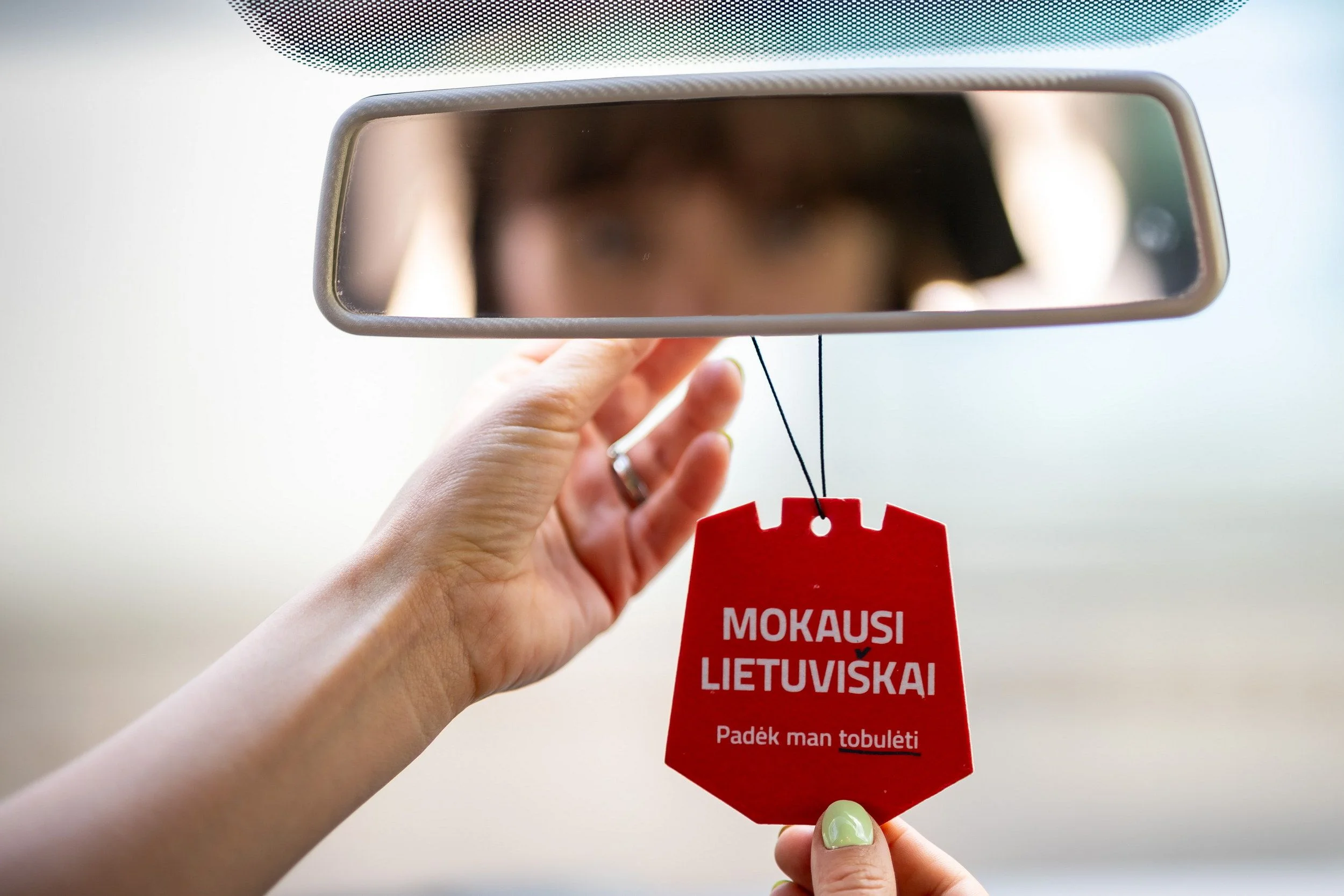
The city of Vilnius has launched a public initiative aimed at curbing the local habit of defaulting to English when interacting with foreigners. The campaign, titled “I am learning Lithuanian. Help me improve,” encourages residents to persist with the local language in daily interactions to help the city’s growing international population integrate more effectively.
To facilitate this, the Vilnius City Municipality is distributing stickers and car air fresheners featuring the campaign’s slogan. These markers are designed to be displayed in ride-hailing vehicles, cafes, and service points, signaling to customers and locals that the person serving them is actively trying to master the Lithuanian language and welcomes the opportunity to practice.
A Strategic Shift in Urban Integration
The initiative addresses a common paradox in many European capitals where high English proficiency among locals can inadvertently isolate foreign residents. In Vilnius, where a significant portion of the population is fluent in English or Russian, many locals reflexively switch to these languages the moment they detect an accent or a struggle for words. While intended as a polite gesture, officials argue this “convenience trap” deprives newcomers of the vital daily practice needed for long-term social and professional integration.
“If we want to hear more Lithuanian spoken in Vilnius, we must start the change with ourselves,” said Valdas Benkunskas, the Mayor of Vilnius. “We often switch to English without thinking, taking away a person’s chance to learn. Even a short conversation in a shop, a cafe, or during a ride can become valuable practice. Friendly support not only strengthens language skills but also creates a more open, inclusive city.”
The Role of the Gig Economy and Local Business
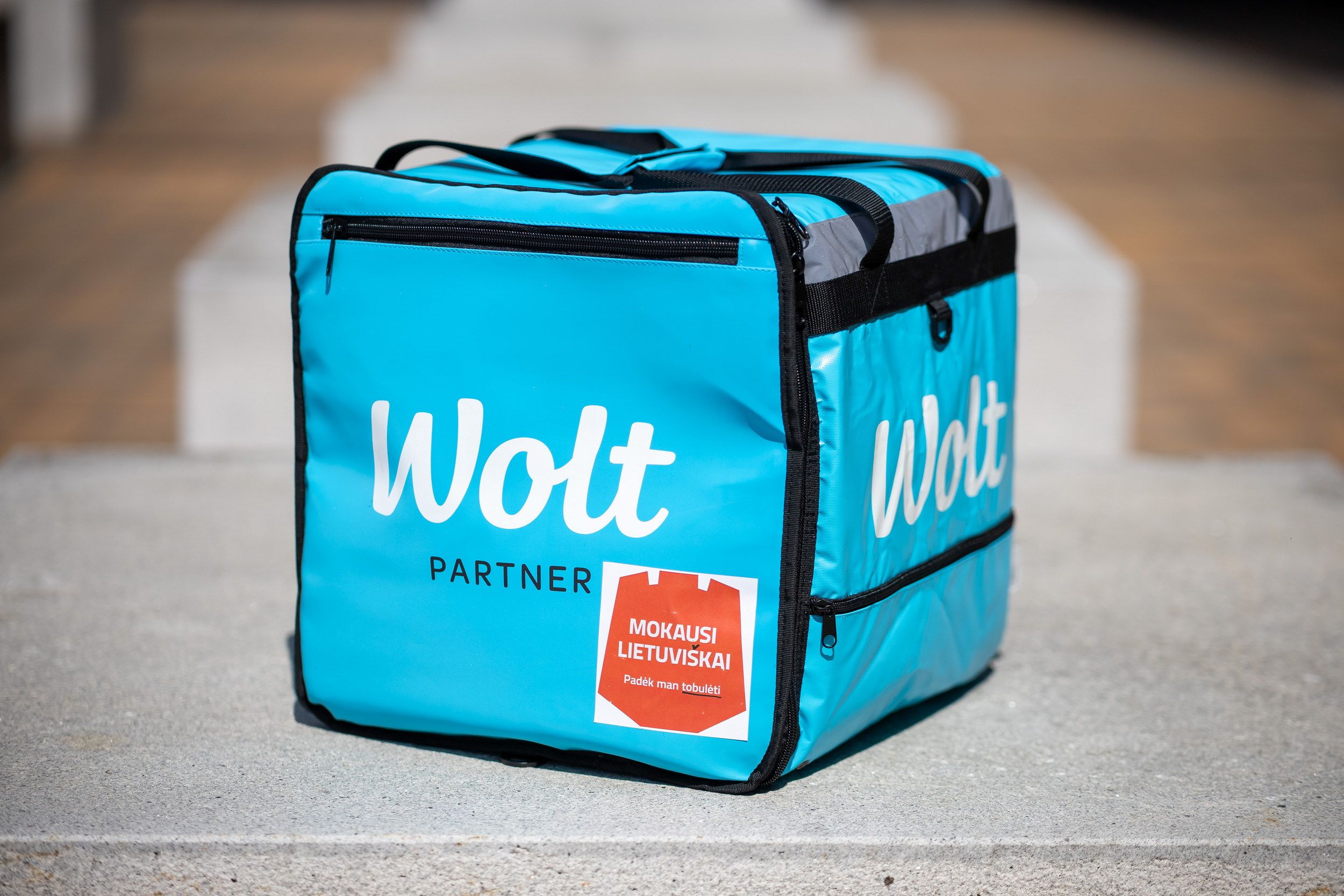
The campaign has already gained significant traction through partnerships with major digital platforms, including Bolt and Wolt. These companies employ a high number of foreign nationals as couriers and drivers, many of whom are the primary point of contact for locals. By placing the “I am learning Lithuanian” stickers in their vehicles, drivers can signal their preference for a local-language interaction without the pressure of formal testing.
Laimonas Jakštys, head of ride-hailing at Bolt, noted that many drivers are making significant efforts to learn the language not just for service quality, but to feel like full members of society. “Language courses are often not enough; the best way to learn is through daily practice. Even a simple greeting or a question in Lithuanian can give a driver the confidence they need,” Jakštys stated.
Beyond the gig economy, the municipality is inviting all businesses that employ international staff to participate. Companies can download sticker templates from the city’s integration platform, askalbu.lt, or collect physical materials directly from the municipality building.
Public Sentiment and Social Cohesion
The initiative is backed by data suggesting that language is a primary factor in social harmony. A representative survey conducted by Norstat revealed that 76 percent of Vilnius residents believe that if immigrants used the Lithuanian language more frequently in everyday situations, social tensions related to immigration would decrease.
This sentiment is mirrored by the high demand for language learning resources. The city’s dedicated platform, askalbu.lt, reports that registration for free or subsidized language courses often fills up almost immediately after being announced. The new campaign aims to bridge the gap between formal classroom learning and the “real-world” application of the language, turning the entire city into a decentralized classroom for its newest residents.
Source: Vilniaus miesto savivaldybė
Source check Official Municipal Reporting
This report is based on an official announcement from the Vilnius City Municipality regarding its social integration strategy.
- Verified the existence of the askalbu.lt platform and its role in language integration.
- Confirmed the participation of Bolt and Wolt in the sticker initiative.
- Cross-referenced the Norstat survey figures cited by the Mayor's office.
- Source
- vilnius
- Scope
- Vilnius, Lithuania
- Updated
- 2026-05-18 12:36
Source check
Report a trust issue
Send a clear signal to community moderation if the source, facts or context need review.
Article contextPeople & topics2#5
What do you think about this article?
Reader Ideas Newsroom
Have a sharper angle for this topic? Add it to the community idea board and let readers vote it up for editorial review.




/linkComments
8+ useful words can earn +10-60 DP; shorter replies can still publish without DP.