Humanoid Robots Join the Classroom at Klaipėda’s STEAM Centre
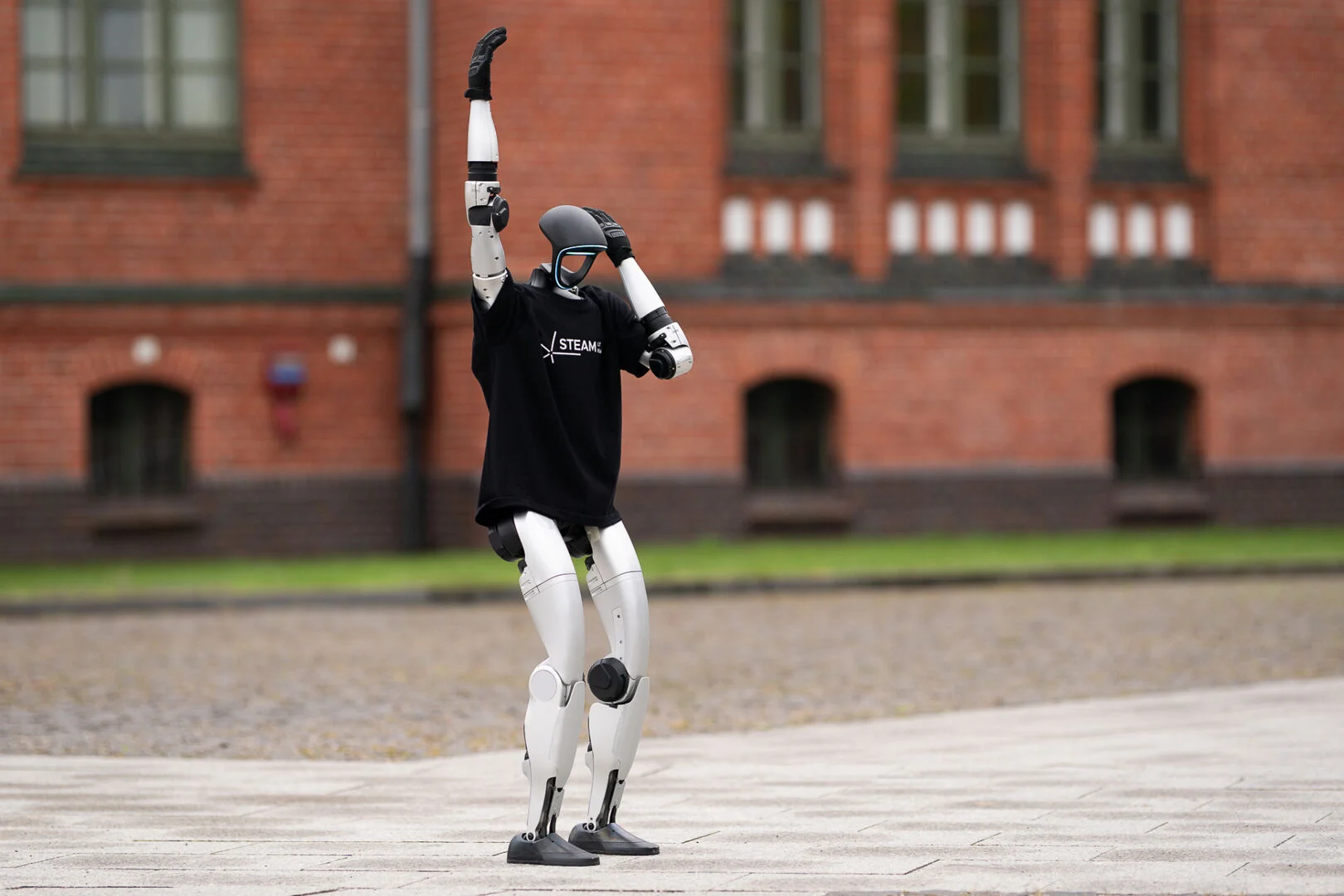
In the brightly lit corridors of the Klaipėda University (KU) STEAM centre, a new type of teaching assistant is taking its first steps. It is not a human trainee, but a Unitree Robotics humanoid, capable of navigating stairs, maintaining balance on uneven surfaces, and even leading a morning exercise routine for visiting students. This is the new reality for technical education in Lithuania’s port city, where the integration of advanced robotics is moving beyond simple demonstration and into the realm of functional, social interaction.
The centre recently expanded its technological infrastructure with three new humanoid robots and several robotic manipulators. While the sight of a robot performing squats might seem like a novelty, the underlying objective is far more rigorous. These machines are being used as primary tools for exploring the complex intersection of human-technology interaction, a field that is becoming increasingly critical as artificial intelligence (AI) moves from our screens into our physical spaces.
Beyond the Novelty: Robots as Functional Educational Tools
The Unitree humanoid robots deployed at the centre are designed for more than just mobility. Equipped with advanced navigation systems, they can adapt to complex environments, making them ideal for simulating real-world industrial tasks such as assembly, object relocation, and inspection. However, their role in the STEAM centre is primarily educational. By integrating AI, these robots can be programmed for diverse functions, acting as a bridge between abstract coding principles and physical execution.

Currently, these humanoids serve as assistants to the centre’s methodologists. They guide students from one point to another and engage them in physical activities, but the long-term vision is more ambitious. Educators at the centre suggest that in the near future, such robots could act as a ‘second teacher’ in the classroom—monitoring the environment, ensuring safety, and providing a constant, interactive presence that boosts student engagement.
Alongside the larger humanoids, the centre utilizes NAO robots. Their anthropomorphic, approachable design makes them particularly effective for younger age groups. By working with NAO, students can experiment with complex programming logic in a way that feels intuitive and rewarding, stripping away the intimidation factor often associated with high-level robotics.

Simulating the Modern Workforce with Industrial Manipulators
While the humanoids capture the most attention, the introduction of DOBOT robotic manipulators provides a more direct link to modern industry. These smaller-scale versions of industrial robots allow students to practice automation processes that are currently standard in manufacturing and logistics.
Students use these tools to program tasks such as sorting objects by colour, precision picking and placing, and automated packaging. This hands-on experience is designed to prepare them for higher education and the modern job market, where understanding the mechanics of automation is no longer an optional skill but a core competency.

The Ethics of Social Robotics and the Human-Machine Bond
Prof. Dr. Aelita Bredelytė, head of the KU STEAM centre, is careful to note that these robots are not intended to be ‘human replacements.’ Instead, they are research instruments for the burgeoning field of social robotics. This discipline examines how robots can recognize human emotions, respond to social cues, and be integrated into daily life without causing discomfort or unrealistic expectations.
“We aim to show young people that the most important goal is to use robots and AI in a way that strengthens human capabilities, rather than replacing them,” says Prof. Bredelytė.
This approach includes a heavy emphasis on the ethical dilemmas of the digital age. As students learn to build and program these machines, they are also prompted to discuss privacy, data security, and human autonomy. By fostering a critical perspective, the centre ensures that the next generation of innovators views technology not just as a tool for efficiency, but as a social agent that must be managed with responsibility and care for the public good.
Source: BNS



Comments