Westminster residents face Oxford Street access fight: practical information

Westminster City Council says a judicial review against plans to pedestrianise Oxford Street is unlikely to succeed, but it has not dropped its opposition to the scheme or its push for changes affecting residents, businesses, buses and visitors.
The council said it sought further legal advice under the instruction of its new leader, Paul Swaddle, after long-running concerns across the authority about the proposed changes to one of central London’s busiest streets. That advice found that a judicial review would be unlikely to succeed and that a late claim would probably be refused.
The position leaves Westminster City Council looking for other legal and procedural routes to influence the future of Oxford Street, rather than pursuing the most direct courtroom challenge.
Access and bus routes remain the central dispute
The council’s statement points to accessibility and bus routes as significant issues for people who live near Oxford Street, work in the area or rely on public transport to reach the West End.
Pedestrianisation would change how traffic, deliveries, taxis, emergency access and bus services interact with the street. For residents, the practical question is not only whether the road becomes more walkable, but where displaced traffic and passengers go instead.

Oxford Street is also a major retail corridor, so changes to access can affect shops, hospitality venues and employers as well as people travelling through the district. Westminster City Council said local people and businesses must have a clear voice in those decisions.
The statement does not set out a new transport plan or alternative route map. It does, however, signal that the council will keep pressing for outcomes that address local access concerns before final arrangements are settled, as wider Oxford Street talks continue.
Legal advice weakens the case for judicial review
A judicial review is a legal process used to challenge whether a public body has acted lawfully in making a decision. It is not a fresh public vote on whether a policy is popular or unpopular.
Westminster City Council said its latest advice is that a judicial review against the Oxford Street pedestrianisation plans would be unlikely to succeed. It also said a late claim for judicial review would result in refusal.

That legal position matters because it narrows the council’s options. A full legal challenge can be costly and time-sensitive, and the court usually focuses on the legality of the decision-making process rather than the wider political argument.
The council’s wording leaves open the possibility of other steps. It said the matter is “not the end of the road” and that it is considering all other legal and procedural options.
Paul Swaddle seeks a meeting with the Mayor of London
Council leader Paul Swaddle has written to the Mayor of London requesting a meeting about the Oxford Street proposals.
The purpose of that meeting, according to the council, would be to raise Westminster’s concerns and seek better outcomes for residents and businesses. The statement does not say whether a meeting date has been agreed.
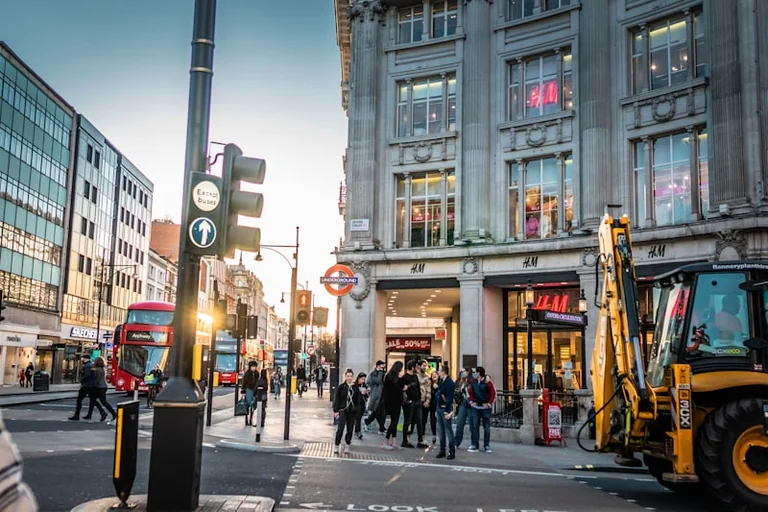
The next stage is likely to focus on negotiation and process rather than an immediate court battle. That could include scrutiny of consultation, transport mitigation, accessibility arrangements, servicing plans and how local impacts are monitored.
For people who use Oxford Street regularly, the key practical details still to watch are bus route changes, step-free access, taxi and private hire arrangements, delivery access, traffic displacement on nearby streets and the timetable for implementation.
Oxford Street’s post-lockdown recovery frames the debate
Westminster City Council described Oxford Street as being at the heart of the city and said it had fought to revive the street after the Covid lockdown period.
That recovery context explains why the dispute is broader than road layout. Oxford Street is both a shopping destination and a lived-in part of central London, with residents nearby and businesses dependent on reliable movement of staff, customers and goods.
Supporters of pedestrianisation have generally argued that removing general traffic can make major shopping streets safer, cleaner and more attractive. Westminster’s latest statement does not reject improvement in principle, but it says the current concerns around access and bus movement remain unresolved.
The council said it will continue to play a key role in the future of Oxford Street and will use the levers available to it to ensure local voices are heard.
Source: Westminster City Council
Source check Source trail
This report is based on Westminster City Council’s statement about its legal position on Oxford Street pedestrianisation.
- Confirmed the council’s stated legal advice on judicial review prospects.
- Identified the named official, Paul Swaddle, and his request for a meeting with the Mayor...
- Separated confirmed council position from wider transport and access implications.
- Kept the geographic scope to Westminster and Oxford Street rather than the source publishe...
- Source
- Westminster City Council
- Scope
- Westminster
- Updated
- 2026-05-29 15:58
Source check
Report a trust issue
Send a clear signal to community moderation if the source, facts or context need review.



Comments