Walking meetings: when they sharpen focus and when they do not
Contents
- UK hybrid work makes walking meetings more tempting, but also more uneven
- The best walking meetings are verbal, short and low-document
- When walking makes work worse
- A practical decision table for meeting formats
- Accessibility should be planned before the invite goes out
- Weather, daylight and safety need boring planning
- How to capture actions without killing the benefit
- The best rule is task first, movement second
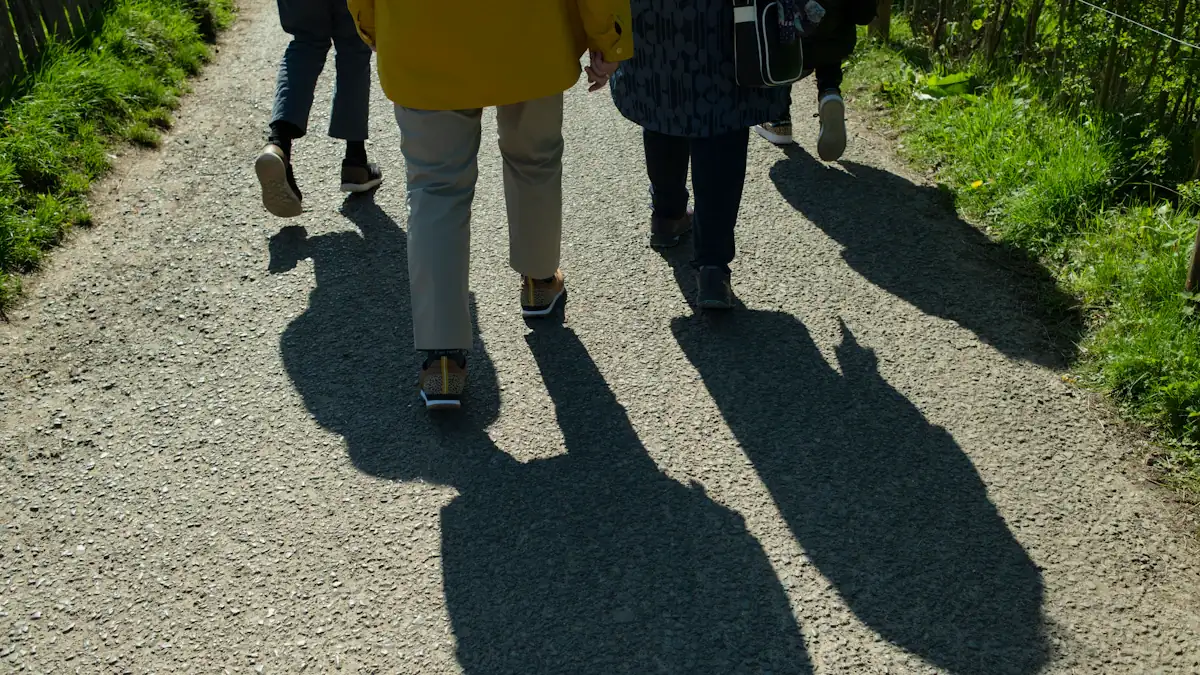
Longer daylight can make a walking meeting feel like an easy productivity win, but the format only helps when the work is conversational, low-risk and easy to summarise afterwards. In UK hybrid teams, the better question is not whether walking is healthier than sitting. It is whether movement improves this specific meeting without excluding anyone or losing the decision trail.
A walking meeting can be useful for a one-to-one update, a stuck problem, a difficult but informal conversation, or a short reset between screen-heavy tasks. It is a poor fit for detailed decisions, document review, confidential matters in public spaces, or anything where a participant needs a screen, captions, assistive tech, careful notes or stable concentration.
The practical rule is simple: use walking as an option, not a workplace virtue signal. If the meeting needs evidence, privacy, records or equal access to tools, keep it seated or hybrid-friendly.
UK hybrid work makes walking meetings more tempting, but also more uneven
Hybrid work has changed the rhythm of the office week. Many UK teams now cluster meetings on in-office days, which can turn the day into a chain of rooms, calls and hurried desk catch-ups. In spring and summer, longer daylight makes a short walk before, during or after work feel more available, especially for people commuting less often.
That does not mean a walking meeting is automatically inclusive or productive. A person may be managing a disability, pain, fatigue, pregnancy, caring responsibilities, sensory overload, asthma, anxiety, mobility limits or an injury. Someone else may be working from a small flat, a shared space or a location where going outside is not practical.
UK employers also need to treat accessibility as more than politeness. Under workplace inclusion duties, including reasonable adjustments for disabled workers, a meeting format should not make participation harder for someone who needs a seated space, assistive technology, captions, written materials or predictable timing.
The most useful walking-meeting policy is therefore not “we walk on Thursdays”. It is “walking is available when it suits the task and the people involved”.
The best walking meetings are verbal, short and low-document
Walking works best when the purpose is to think, listen or unblock. Movement can reduce the stiffness of back-to-back calls and make a conversation feel less performative than sitting opposite someone in a room. For some people, walking also makes it easier to talk through a problem without staring at slides.
Good candidates include:
- Weekly one-to-one updates where both people already know the context.
- Early problem-solving when the goal is to generate options, not approve one.
- Relationship check-ins after a project has become tense or unclear.
- Retrospective conversations where the output is a few themes, not a transcript.
- Short planning walks before returning to a desk to write the actual plan.
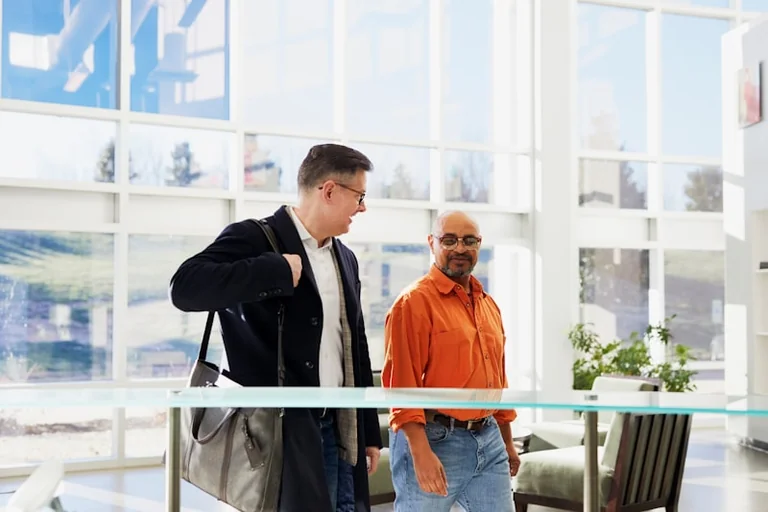
The strongest walking meetings usually have two or three people, a clear route, a clear end time and a low need for screens. They also have a named person responsible for writing down actions afterwards.
They are less effective when the walk becomes a substitute for preparation. If nobody knows the question being discussed, movement will not fix that. A useful walking meeting still needs a purpose: “decide the next two options for the client proposal” is better than “catch up about the proposal”.
When walking makes work worse
The problems usually appear when the meeting needs precision. Walking while trying to compare numbers, approve a budget, review a contract, assess a design, read policy wording or track multiple action owners can create weak decisions. People may remember the mood of the conversation but miss the details.
A walking meeting is also a bad fit when one person needs to take careful notes while the other keeps talking. Voice notes can help, but they raise consent, confidentiality and data-handling questions. A phone note typed at a crossing is not a reliable record of a decision that affects customers, money, HR matters or legal risk.
Confidentiality is a particular issue in public spaces. Parks, station approaches, office courtyards and shared streets are not private. Even if names are avoided, a client, employee, supplier or internal project can be identifiable from context. Sensitive subjects should stay in a controlled setting.
Walking can also reduce focus for some people. Traffic noise, weather, navigation, uneven pavements, glare, crowds and safety awareness all compete for attention. For neurodivergent workers or anyone who relies on visual materials, the format may add cognitive load rather than reduce it.
A practical decision table for meeting formats
| Meeting type | Better format |
|---|---|
| One-to-one check-in with no documents | Walking or seated, by agreement |
| Early brainstorming or problem framing | Walking can work well |
| Performance, HR, pay or health discussion | Seated and private |
| Contract, budget or policy review | Seated with documents visible |
| Project decision with several owners | Seated or video with notes captured live |
| Team stand-up | Optional, only if everyone can participate equally |
| Mentoring conversation | Walking can work if privacy and access are suitable |
| Client call | Usually seated unless informal and pre-agreed |
This table is not a rulebook. It is a risk check. If the meeting depends on documents, confidentiality, accessibility tools or a reliable record, walking should not be the default.
Accessibility should be planned before the invite goes out
The simplest inclusive move is to offer a choice in the invite: “Walking or seated both work for me.” That removes pressure from the other person to disclose why walking is not suitable.
Avoid making walking a status signal. If senior leaders praise walking meetings as the “better” way to work, people may feel pushed into them even when the format is painful, unsafe or impractical. That is especially risky in hybrid teams where some workers already worry about visibility.
Better practice includes:
- Asking for format preferences privately where needed.
- Keeping routes step-free, short and familiar if walking is chosen.
- Avoiding fast walking, noisy roads and crowded routes.
- Allowing remote participants to join seated without apology.
- Sharing the agenda before the meeting so nobody relies on memory alone.
- Providing written follow-up for anyone who could not attend in that format.
Accessibility is not only about mobility. It can include hearing, sight, fatigue, anxiety, sensory processing, medication effects, caring commitments and the need for assistive software. A walking meeting that helps one person focus may make another person work harder to keep up.
Weather, daylight and safety need boring planning
In the UK, daylight varies sharply across the year. A walking meeting that feels easy in June may be unpleasant or unsafe in late November at 4.30pm. Rain, wind, heat, icy pavements and poor light all change the calculation.
The best walking meetings have a backup. Put the route and seated fallback in the invite. Keep the walk short enough that bad weather does not become a test of commitment. If the conversation is important, do not let weather turn it into a rushed exchange under a doorway.
Safety also matters. Avoid routes where people need to cross busy roads repeatedly, walk through poorly lit areas, or carry laptops and bags in awkward conditions. If a participant is joining by phone while walking elsewhere, they should not be expected to discuss complex matters while navigating traffic.
How to capture actions without killing the benefit
The biggest weakness of walking meetings is the gap between insight and record. A good conversation can evaporate by the time both people return to their desks.
Use a light follow-up system:
- Agree the desired output before walking: decision, options, risks or next steps.
- Pause at the end for a 60-second recap.
- Name the action owner before separating.
- Send a written summary within 30 minutes where practical.
- Mark uncertain points clearly instead of turning them into false decisions.
A follow-up note can be short: “We agreed to test option A with the client, compare cost by Friday, and keep option B as backup.” That is enough for many informal meetings. For bigger decisions, the walking meeting should feed into a seated decision record, not replace it.
The best rule is task first, movement second
Walking meetings are most useful when they remove friction from a conversation. They are least useful when they hide missing structure, exclude participants, weaken records or move private work into public space.
For hybrid teams, the practical standard is to make walking one format in the toolkit. Use it for short, verbal, low-confidentiality work. Keep document-heavy, sensitive and accessibility-dependent meetings seated by default. The meeting has not improved if the steps went up but the clarity went down.
Source: Editorial research
Source check Workplace context
This article applies general workplace productivity guidance to UK hybrid work, daylight variation, confidentiality and inclusion duties.
- Consider whether the meeting needs documents, privacy or a formal record.
- Offer walking as an option rather than a default requirement.
- Check accessibility needs before changing the meeting format.
- Use a written follow-up for actions and decisions.
- Scope
- United Kingdom
- Updated
- 2026-06-04 10:05
Source check
Report a trust issue
Send a clear signal to community moderation if the source, facts or context need review.


Comments