Vilnius District Real Estate: Construction Permits Double in Growth Surge

The suburban landscape surrounding Lithuania’s capital is undergoing a dramatic transformation. Recent data from the Construction Sector Development Agency (SSVA) reveals that the number of construction permits issued in the Vilnius district has more than doubled year-on-year, marking a record-breaking pace of development that outstrips even the country’s largest cities.
While urban centers often dominate real estate headlines, the periphery of Vilnius has emerged as the primary engine of residential growth. In April 2026, the Vilnius District Municipality issued 182 construction permits—a staggering 125% increase compared to the 81 permits issued in April 2025. This surge represents the highest growth rate among all Lithuanian municipalities, signaling a decisive shift in where residents and investors are placing their capital.
A Comparative Look at Regional Development
The scale of this expansion becomes clearer when compared to other major administrative regions. Despite being a district rather than a primary urban center, the Vilnius region is currently outperforming the capital city itself in terms of new permit volume.
| Municipality | Permits Issued (April 2026) | Comparison to Previous Year |
|---|---|---|
| Vilnius District | 182 | More than doubled |
| Vilnius City | 128 | Moderate growth |
| Kaunas District | 121 | Steady |
| Klaipėda District | 103 | Stable |
It is important to note that these figures represent permits, not individual buildings. In many cases, a single permit covers the construction or reconstruction of multiple structures. For instance, the 182 permits approved in April 2026 actually account for 187 planned buildings. This distinction suggests that the physical density of development is even higher than the raw permit data implies.
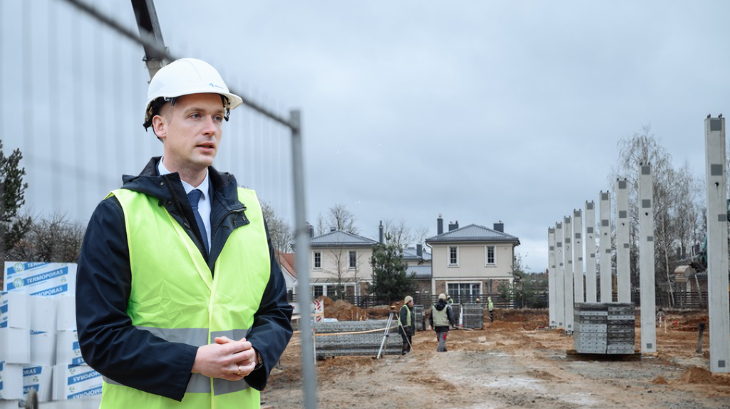
The Infrastructure Challenge
Rapid growth often brings the risk of “infrastructure lag,” where residential housing outpaces the provision of essential services. Vilnius District Mayor Robert Duchnevič has acknowledged that this statistical boom is a double-edged sword. While it reflects high economic activity and investment, it places immense pressure on the municipality to ensure that roads, schools, and social services do not fall behind.
To manage this, the local administration is currently focusing on a “synchronized growth” strategy. This involves expanding the network of educational institutions and modernizing public infrastructure in tandem with new housing developments. The goal is to move away from reactive planning—where services are added only after a crisis of capacity—toward a model where infrastructure is integrated into the development phase.
One significant hurdle remains the simplification of local regulations. As the administrative director Vytauto Vansavičius noted, the workload for municipal specialists has intensified alongside the permit surge. While all April permits were processed within statutory deadlines, the municipality is looking to further refine processes to ensure that both businesses and individual residents face fewer bureaucratic bottlenecks.

Demographics and the ‘Commuter Belt’ Appeal
The primary driver behind this boom is a sustained demand for single-family homes. In 2025, the Vilnius district became the absolute leader in Lithuania for detached house permits, issuing 1,063—significantly more than Kaunas (783) or Vilnius City (718).
This trend is fueled by a specific demographic: young families. Approximately 37% of the district’s population falls within the 18–44 age bracket. These residents are primarily settling in “commuter belt” wards such as Avižieniai, Riešė, Nemėžis, and Mickūnai. These areas offer a blend of green space and proximity to the capital’s job market, making them the epicenters of the region’s 1.6% to 2% annual population growth.
As the district approaches a total population of 121,000, the focus for 2026 and beyond will be whether the municipality can maintain its “green and modern” vision while absorbing thousands of new residents each year. For investors and prospective homeowners, the data proves that the Vilnius district is no longer just a suburb—it is becoming a primary economic hub in its own right.
Source: Vilniaus rajono savivaldybė


Comments