Roubaix’s New MP Confronts France’s Energy-Inefficient Housing Crisis

Shéhérazade Bentorki has officially transitioned from parliamentary aide to Member of Parliament for France’s 8th constituency, representing Roubaix and Wattrelos. Taking office following the resignation of David Guiraud—who stepped down to comply with France’s strict ‘non-cumul des mandats’ (non-accumulation of mandates) law after being elected Mayor of Roubaix—Bentorki has immediately positioned herself at the center of a national debate regarding housing standards and energy efficiency.
Her arrival at the National Assembly coincides with a pivotal moment for French residential policy. As the government explores the ‘loi de relance du logement’ (housing recovery bill), Bentorki has emerged as a vocal critic of proposals that would relax the Energy Performance Diagnostic (DPE) requirements. These standards currently restrict the rental of properties classified as ‘passoires énergétiques’—energy sieves—which fall into the lowest F and G efficiency categories.
The Battle Against Energy-Inefficient Housing
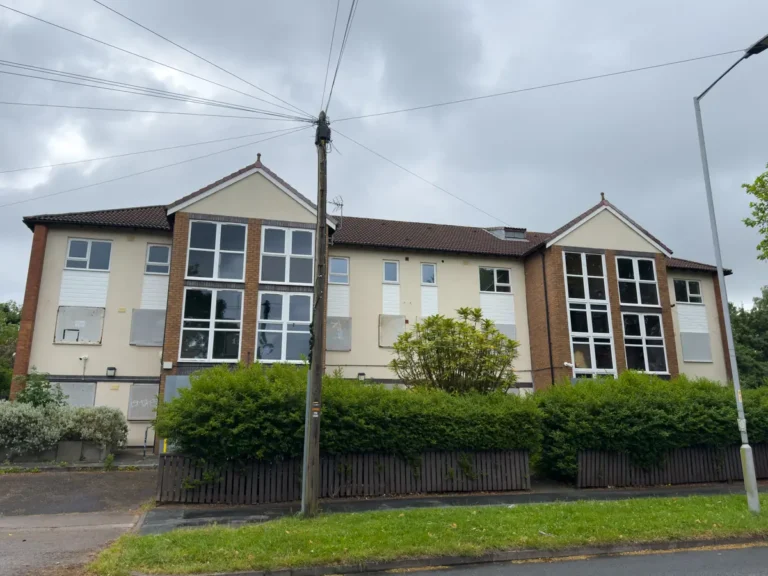
For the residents of Roubaix, a city historically grappling with high levels of urban poverty and aging infrastructure, the quality of rental stock is a matter of public health and economic survival. Bentorki argues that the proposed easing of DPE rules, which would allow substandard housing back onto the market under certain conditions, is a step backward for social dignity.
“Responding to the need for housing by re-renting indecent homes instead of building social housing is absolutely not a solution,” Bentorki stated. She emphasizes that for families in her constituency, a home is more than just a roof; it is a space for children to study and for individuals with disabilities to live with autonomy. The MP views the push to lower energy standards as a failure to address the root cause of the housing crisis, suggesting that it places the burden of the energy transition on the most vulnerable tenants who are already struggling with rising utility costs.
From the Wrestling Mat to the Palais Bourbon
Bentorki’s approach to politics is informed by a disciplined background in high-level sport. A former competitive wrestler, she credits the rigors of the sport—where she once trained seven hours a day while studying political science—with providing the endurance and character required for her current role. This background in ‘lutte’ (wrestling) serves as a metaphor for her legislative style: resilient, calculated, and focused on the long game.
Her transition to the National Assembly is not a leap into the unknown but a continuation of her work on the ground. Having served as a municipal councillor and a parliamentary collaborator, she claims to “know the shop” well. This familiarity with the machinery of government is now being applied to her role on the Finance Committee, where she is currently advocating for the ‘Fonds Vert’ (Green Fund). This initiative aims to accelerate ecological transitions at the local level, specifically focusing on rehabilitating schools to create ‘islands of freshness’—green spaces designed to mitigate rising urban temperatures.
Balancing National Legislation with Local Reality
Bentorki’s weekly schedule reflects the dual demands of the French deputy. From Monday to Thursday, she is stationed at the Palais Bourbon in Paris, participating in hemicycle sessions and committee meetings. The latter half of the week is dedicated to her constituency in the North, where she maintains a heavy schedule of field representations and meetings with local residents.
This connection to the ‘quartiers populaires’ (working-class neighborhoods) remains her primary motivation. She asserts that as a woman from these backgrounds, her presence in the National Assembly is a statement of pride and a refusal to be sidelined. Her focus remains fixed on the intersection of housing, ecology, and social justice, ensuring that the voices of Roubaix are heard in the national discourse on urban renewal.
As the housing recovery bill moves through the legislative process this summer, Bentorki’s opposition to the relaxation of energy standards will serve as a significant test of her influence. For the people of the 8th constituency, the outcome will determine whether the future of their housing market prioritizes immediate availability or long-term habitability and environmental responsibility.
Source: Roubaix XL
Source check Legislative Profile
This report is based on an interview with the sitting MP for Roubaix-Wattrelos regarding her legislative priorities and the French housing recovery bill.
- Verified Shéhérazade Bentorki's appointment to the National Assembly on April 8.
- Confirmed the context of the 'non-cumul des mandats' law affecting David Guiraud.
- Cross-referenced the 'loi de relance du logement' and the DPE energy standards debate in F...
- Source
- roubaix
- Scope
- Roubaix, France
- Updated
- 2026-05-16 06:33
Source check
Report a trust issue
Send a clear signal to community moderation if the source, facts or context need review.

Comments