
Riga is taking a significant step toward solving the perennial “June gap” for working families. For the first time, the Riga Municipality has announced a pilot program providing free extracurricular activities throughout June for students in grades 1 to 4. This initiative, launching in June 2026, aims to bridge the difficult period between the end of the academic year and the start of traditional July summer camps, offering a safe and educational environment for over 1,000 children.
The decision comes as a direct response to high demand from parents who struggle to find affordable childcare once the school gates close for the summer. By utilizing municipal schools and interest-based education centers, the city is transforming existing infrastructure into a summer support network. This pilot project will serve as a testing ground; the municipality intends to evaluate the program’s popularity and logistical efficiency to determine if it should become a permanent fixture of the city’s social support system.
Beyond the immediate benefit of childcare, the program carries a deeper strategic objective for the Latvian capital. It is being integrated into the “Unified School” principle, a national effort to ensure that all children, regardless of their background, are fully immersed in the Latvian language. By hosting these activities exclusively in the state language, the city aims to help younger students maintain and strengthen their linguistic skills outside the formal classroom setting. Vilnis Ķirsis, Vice-Chairman of the Riga City Council, noted that the more time children spend in an environment where the state language is the primary mode of communication, the more naturally their language proficiency will take root.
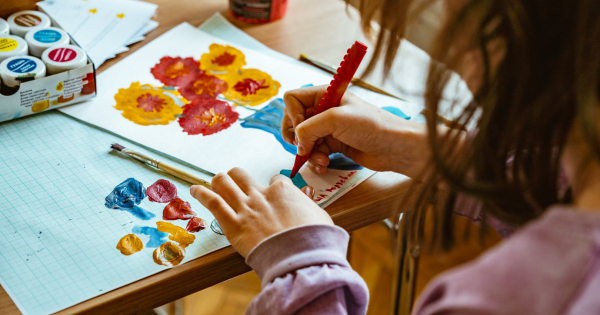
What the Program Includes
The activities are designed to be diverse and engaging, ensuring that the “extra school time” feels like a holiday rather than a continuation of lessons. While each of the 30 participating institutions will develop its own specific curriculum, the general framework includes:
- Physical Activities: Sports and active games that require no prior training or specialized equipment.
- Creative Workshops: Arts, crafts, and hands-on projects to foster imagination.
- Social Integration: Games and entertainment events designed to help children from different schools make new friends.
- Language Reinforcement: Integrated activities that naturally encourage the use of the Latvian language in daily interactions.
The program is structured to last between 10 and 15 days, with daily sessions ranging from four to six hours. This schedule is specifically designed to cover the core working hours of the morning and early afternoon, providing a vital window of relief for parents.

Enrollment and Eligibility
The pilot program is open to approximately 1,042 children across the city. Interestingly, the municipality has divided the available slots into two categories. Some activities are reserved specifically for students already enrolled in the host school, while nearly half of the spots are designated as “open activities.” These open slots are available to any Riga resident of the appropriate age, regardless of which school they attend during the year.
Parents interested in securing a spot for their child are encouraged to act quickly, as demand is expected to outstrip supply. For those looking to enroll in their child’s current school, the first point of contact should be the school administration. For the “open” activities, the municipality has centralized information on two primary portals: jaunatne.riga.lv and izglitiba.riga.lv. These websites provide a full list of participating locations and specific application instructions for each site.
As Riga monitors the outcomes of this June pilot, the project may serve as a model for other municipalities across the Baltic region facing similar childcare shortages during the early summer months. For now, it represents a practical fusion of social service and educational policy, aimed at making the transition into summer easier for the city’s youngest residents and their families.
Source: Rīgas valstspilsētas pašvaldība
Source check Official Municipal Announcement
This report is based on official documentation from the Riga City Council regarding the 2026 summer pilot program.
- Confirmed the launch of the pilot program for 1st-4th grade students.
- Verified the linguistic focus on the 'Unified School' principle.
- Cross-referenced the 30 planned locations for June 2026 activities.
- Source
- riga
- Scope
- Riga, Latvia
- Updated
- 2026-05-18 15:35
Source check
Report a trust issue
Send a clear signal to community moderation if the source, facts or context need review.
Article contextPeople & topics1#5
What do you think about this article?
Reader Ideas Newsroom
Have a sharper angle for this topic? Add it to the community idea board and let readers vote it up for editorial review.


/linkComments
8+ useful words can earn +10-60 DP; shorter replies can still publish without DP.