
A Montpellier-based startup is transforming the way Parkinson’s disease is managed by turning music into a precision therapeutic tool. Developed by BeatHealth, a company incubated at the Montpellier Métropole BIC, the BeatMove system offers a digital solution to one of the most debilitating symptoms of the condition: the loss of walking autonomy.
While Parkinson’s is widely known for the tremors it causes, gait disorders actually represent the heaviest daily burden for 85% to 90% of patients. In France alone, 270,000 people live with the disease, with 27,000 new diagnoses every year. BeatMove addresses this by using an application that synchronizes music to a user’s footsteps in real-time, effectively smoothing out their movement.
The Science of Rhythmic Auditory Stimulation
The technology is rooted in 15 years of academic research and the principle of Rhythmic Auditory Stimulation (RAS). In a brain affected by Parkinson’s, the basal ganglia—the structures responsible for regulating biological rhythms—begin to fail. BeatMove acts as an “external clock” to compensate for this internal deficiency.
However, simply listening to a playlist is not enough. Guillaume Tallon, CEO of BeatHealth, warns that unadapted music can be counterproductive. If the tempo is too fast, the walker may struggle to keep up, leading to exhaustion and a degradation of performance. The intelligence of BeatMove lies in its ability to personalize the experience. Using an algorithm developed by a team of seven doctors in neuroscience, movement science, and computer science, the system adjusts the music’s tempo to the user’s specific physical capacity.

Clinical Results and the Virtuous Circle of Mobility
Studies conducted by the team at the University of Montpellier have shown significant clinical benefits. Patients using the system demonstrated improved walking speed, increased step length, and a notable reduction in the frequency of falls.
Beyond the physical metrics, the technology addresses the psychological impact of the disease. By reducing the risk of falling, the system helps break the “vicious cycle of deconditioning.” When patients feel safer, they move more; as they move more, their overall quality of life improves significantly. This restoration of confidence is often as critical as the physical rehabilitation itself.
How the Digital DJ Works
The setup involves a smartphone app and two sensors worn as ankle bracelets. The user selects their preferred musical styles within the app, which then pulls from a library of tracks pre-selected for their rhythmic regularity.
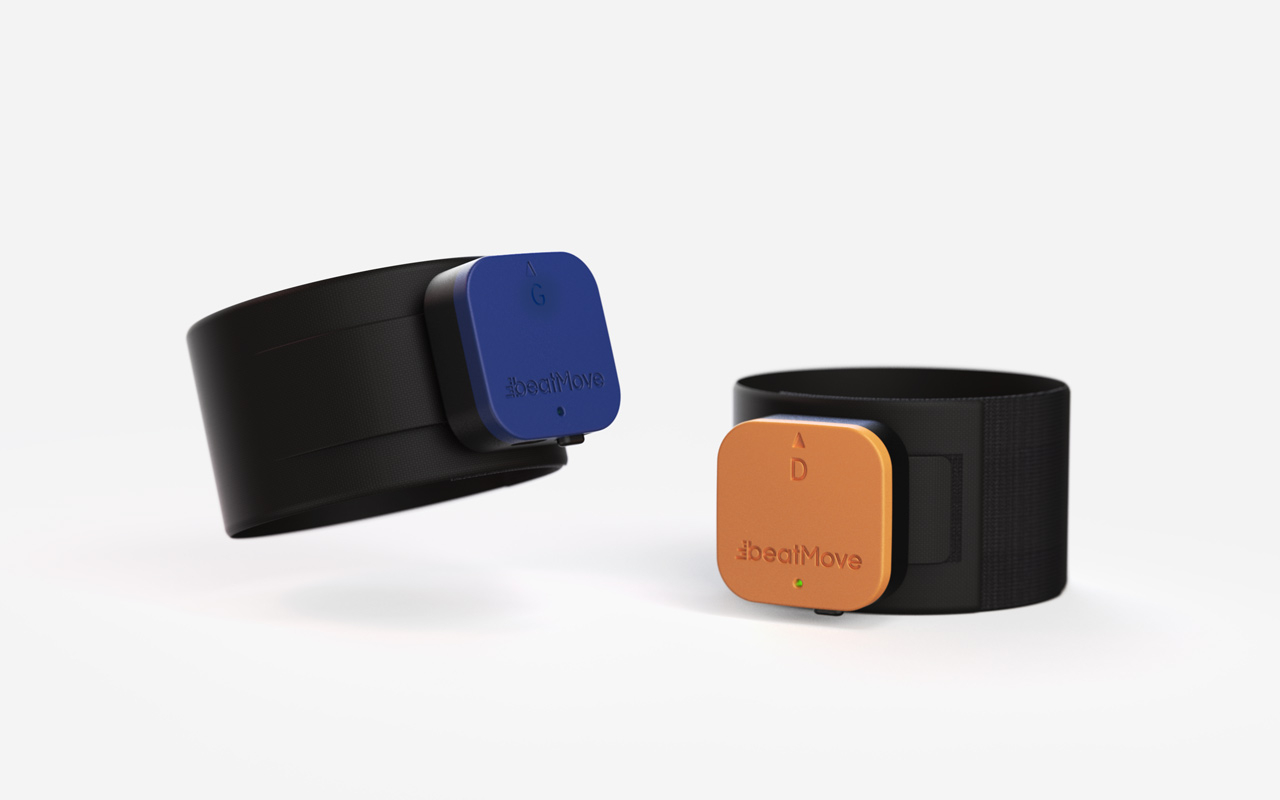
The patented audio-motor synchronization algorithm analyzes the patient’s cadence via the ankle sensors. Once a stable walking rhythm is established, the system subtly increases the tempo, acting as a “walking DJ” or virtual coach to encourage the user to accelerate safely within their limits.
Accessibility and Future Applications
BeatHealth currently offers the solution via a subscription model for €30 per month, which includes both the hardware and software. The startup is already supported by the France Parkinson association, which recently took a stake in the company’s capital. The next major milestone for the firm is obtaining reimbursement from the French Social Security system to ensure the technology reaches as many patients as possible.
While the current focus is Parkinson’s, the potential applications for rhythmic therapy are broad. Future developments are planned for stroke rehabilitation, multiple sclerosis, and fall prevention in the elderly. Even for the general public, the tool could serve as a powerful motivator to combat sedentary lifestyles and improve athletic performance.
Source: En Commun – Montpellier
Source check Health Innovation Report
Based on clinical research from the University of Montpellier and official statements from BeatHealth and France Parkinson.
- Verified the existence of BeatHealth at the EuroMov Center in Montpellier.
- Confirmed the 270,000 Parkinson's cases statistic via France Parkinson data.
- Cross-referenced the principle of Rhythmic Auditory Stimulation (RAS) with established neu...
- Source
- montpellier
- Scope
- Montpellier, France
- Updated
- 2026-05-16 06:00
Source check
Report a trust issue
Send a clear signal to community moderation if the source, facts or context need review.
Article contextPeople & topics1#4
What do you think about this article?
Reader Ideas Newsroom
Have a sharper angle for this topic? Add it to the community idea board and let readers vote it up for editorial review.




/linkComments
8+ useful words can earn +10-60 DP; shorter replies can still publish without DP.