Liverpool schools lead the way in life-saving cardiac emergency readiness

At Rice Lane Primary School this Tuesday, the typical sounds of the classroom were replaced by the rhythmic clicks of CPR manikins and the instructional prompts of automated external defibrillators (AEDs). This session marks the beginning of a comprehensive citywide movement to ensure no school in Liverpool is left unprepared for a cardiac emergency.
Liverpool City Council has coordinated a multi-agency response involving Public Health, Education, School Improvement Liverpool (SIL), and the Oliver King Foundation. The objective is to transform every educational setting into a high-readiness zone where staff possess the skills and equipment to intervene within those first critical seconds of a heart stopping.
Rice Lane Primary hosts first citywide training session
The launch of the initiative at Rice Lane Primary School is the first of many scheduled across the city. Public Health Liverpool is funding the Oliver King Foundation and SIL to deliver specialized training, ensuring at least two staff members from every school are fully certified in CPR and AED use. This practical instruction focuses on building the confidence to act, moving beyond theory to ensure that when a crisis occurs, the response is instinctive.
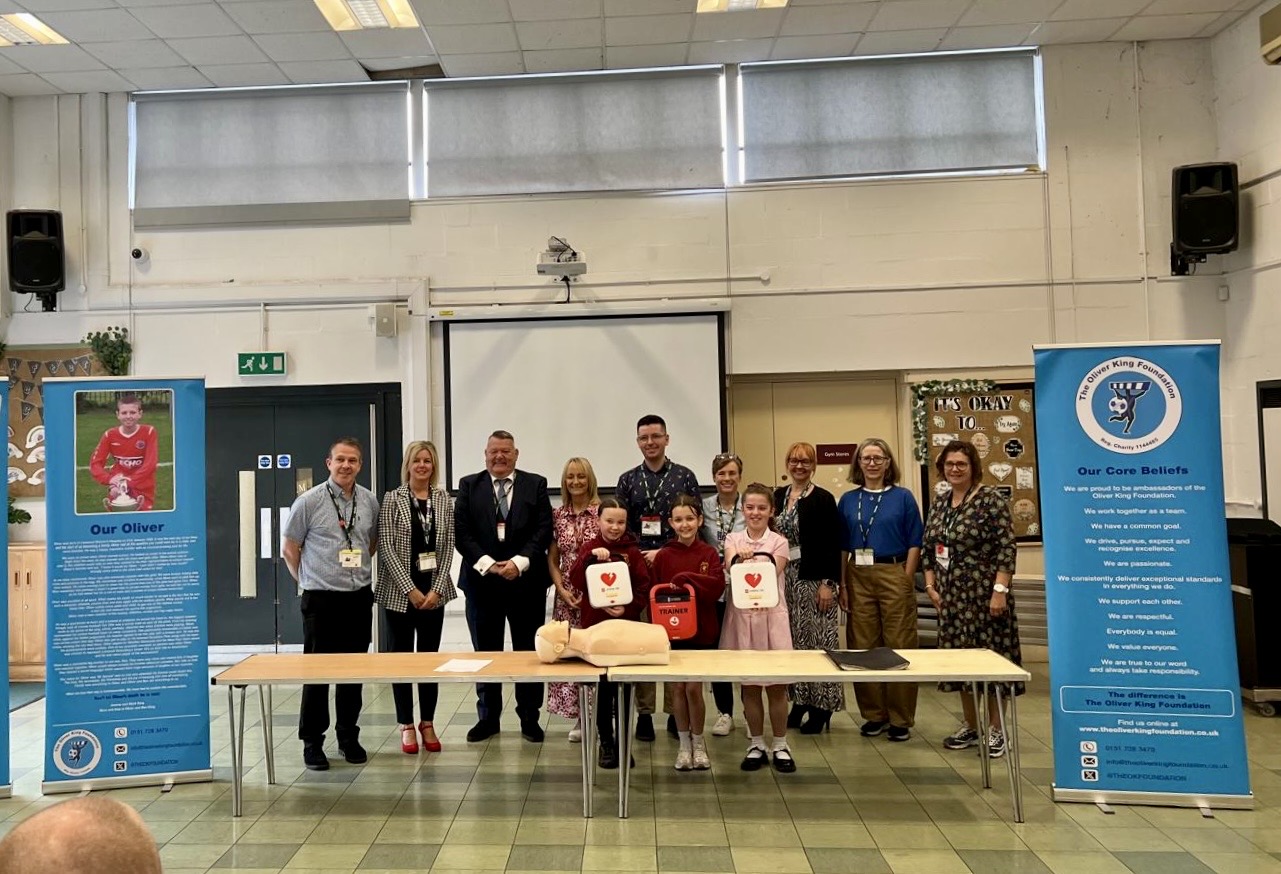
Councillor Harry Doyle, Cabinet Member for Health, Wellbeing and Culture, noted that every second is decisive during a cardiac event. The presence of trained personnel and functional equipment is the primary factor in determining survival outcomes. This program establishes a standardized level of safety across the city’s primary, secondary, and special schools, aligning local efforts with Department for Education safety guidelines.
Honouring the legacy of Oliver King through action
The roots of this initiative are found in a tragedy that remains a core part of Liverpool’s collective memory. In 2012, 12-year-old Oliver King died after suffering a cardiac arrest during a swimming race at King David High School. His father, Mark King OBE, has since dedicated his life to ensuring other families are spared such loss.

The current project is a direct extension of the Oliver King Foundation’s mission. By assessing the current coverage of defibrillators and staff training levels, the city is identifying gaps that could prove fatal. Mark King expressed that the goal has always been to turn Oliver’s legacy into something positive, providing young people with the best possible chance of survival if the worst happens.
Addressing the critical survival gap for young people
While cardiac arrest in children is statistically uncommon, recent data underscores the severity of the issue. Research from the University of Warwick revealed that 617 cardiac arrests occurred in individuals under the age of 18 across the UK in 2024. This equates to approximately 12 incidents every week. Currently, only one in eight children survives such an event, a figure that health officials believe can be significantly improved through rapid intervention.

Professor Matt Ashton, Director of Public Health for Liverpool City Council, highlighted that early CPR and rapid access to a defibrillator are the most effective tools available to improve these survival rates. The program is designed to give schools the specific knowledge and technical skills required to protect not just pupils, but staff and visitors who use school facilities.
Connecting school life-saving equipment to the national network
A central pillar of the initiative involves the technical registration of equipment. Many schools already possess defibrillators, but if they are not registered on ‘The Circuit’—the national defibrillator network—emergency services cannot see them. The project will ensure every device in Liverpool schools is mapped, allowing North West Ambulance Service dispatchers to direct bystanders to the nearest life-saving device during a 999 call.
Furthermore, the initiative encourages schools to make their defibrillators accessible to the surrounding community where possible. This expands the safety net beyond the school gates, potentially saving lives in the wider Liverpool neighborhoods. The Directors of Public Health and Education have now formally requested that all headteachers and chairs of governors commit to this citywide standard of emergency preparedness.
Source: Liverpool City Council
Source check Editorial Transparency
This report is based on official communications from Liverpool City Council and the Oliver King Foundation regarding the 2026 school safety initiative.
- Verified event location at Rice Lane Primary School
- Cross-referenced 2024 University of Warwick cardiac arrest statistics
- Confirmed partnership between Public Health Liverpool and the Oliver King Foundation
- Source
- Liverpool Express
- Scope
- Liverpool
- Updated
- 2026-05-19 14:35
Source check
Report a trust issue
Send a clear signal to community moderation if the source, facts or context need review.



Comments