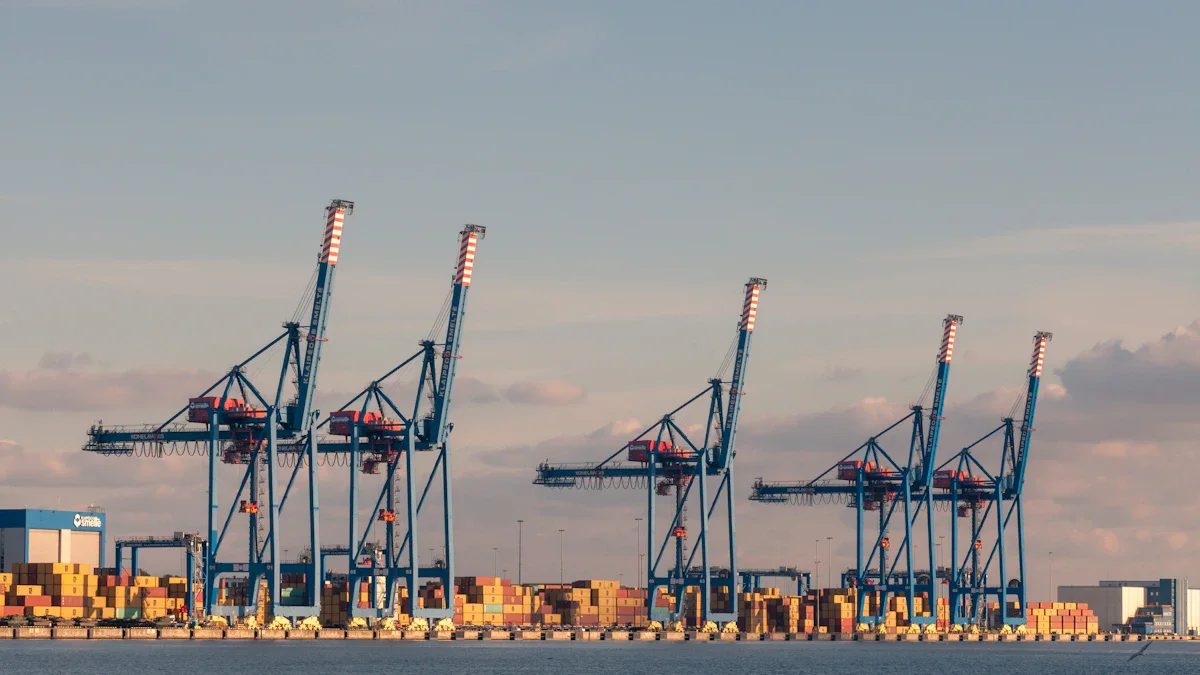
The Lithuanian Parliament, the Seimas, has moved to reconsider the Klaipėda State Seaport Act after President Gitanas Nausėda issued a veto on constitutional grounds. The legislative dispute centers on whether nuclear-armed or nuclear-powered vessels should ever be permitted to enter the country’s primary deep-water port, highlighting a friction point between national security pragmatism and strict constitutional law.
On May 7, the Seimas initially passed a new version of the port law which included a provision stating that “ships with nuclear power plants and nuclear weapons are prohibited from entering the port territory, except in cases where this does not contradict national security interests.” This exception for “national security interests” triggered the presidential veto, with the head of state arguing that the clause creates a loophole that violates the country’s foundational legal document.
The Absolute Constitutional Prohibition
President Nausėda’s veto is rooted in a literal interpretation of Article 137 of the Constitution of the Republic of Lithuania. This article explicitly states that “there may be no weapons of mass destruction and foreign military bases on the territory of the Republic of Lithuania.”
Presenting the veto to the parliament, the President’s Chief Adviser, Ramūnas Dilba, emphasized that the constitutional ban on weapons of mass destruction is “absolute in nature and has no exceptions.” The President’s office argues that by allowing a “national security” exception for nuclear-armed vessels, the Seimas was effectively attempting to override a constitutional mandate through ordinary legislation, which is legally impermissible.

Under the President’s proposed amendment, a clear distinction would be drawn between the vessel’s cargo and its propulsion system. The revised text would maintain an absolute, no-exceptions ban on ships carrying nuclear weapons. However, it would allow for ships with nuclear power plants (such as certain allied aircraft carriers or submarines) to enter the port, provided their presence aligns with national security interests.
Strategic Implications for NATO Allies
This legislative debate carries significant weight for Lithuania’s international defense posture. As a key member of NATO’s eastern flank, Klaipėda often hosts allied naval vessels. While Lithuania does not possess nuclear weapons, many of its closest allies—including the United Kingdom, France, and the United States—operate nuclear-powered naval assets.
The President’s proposed compromise seeks to balance constitutional integrity with the practicalities of modern military cooperation. By allowing nuclear-powered (but not nuclear-armed) vessels under specific security conditions, Lithuania maintains its ability to host advanced allied naval technology without breaching its domestic ban on weapons of mass destruction.

Legislative Path and Final Decision
The Seimas voted overwhelmingly to reconsider the law, with 104 members in favor of the review and only three voting to consider the law rejected entirely. This high margin suggests a willingness within the parliament to align the port regulations with the President’s constitutional concerns.
The returned legislation has now been referred to the Committee on Law and Order for further refinement. A final vote in the Seimas is scheduled for May 21. If the amendments are adopted as suggested by the President, the new regulations are expected to come into force on July 1, providing a clearer legal framework for the Port of Klaipėda at a time of heightened regional maritime tension.
Source: ELTA
Source check Legislative Tracking
This report is based on official proceedings from the Lithuanian Seimas and presidential decrees regarding the Klaipėda State Seaport Act.
- Verified the text of Article 137 of the Lithuanian Constitution regarding WMDs.
- Confirmed the Seimas vote count (104 for reconsideration) from parliamentary records.
- Cross-referenced the President's veto reasoning with official statements from the Presiden...
- Source
- elta
- Scope
- Lithuania
- Updated
- 2026-05-19 08:34
Source check
Report a trust issue
Send a clear signal to community moderation if the source, facts or context need review.
Article contextPeople & topics2#5
What do you think about this article?
Reader Ideas Newsroom
Have a sharper angle for this topic? Add it to the community idea board and let readers vote it up for editorial review.



/linkComments
8+ useful words can earn +10-60 DP; shorter replies can still publish without DP.