Lithuania Claims ‘Best-Protected’ EU Border During Finnish State Visit: local impact
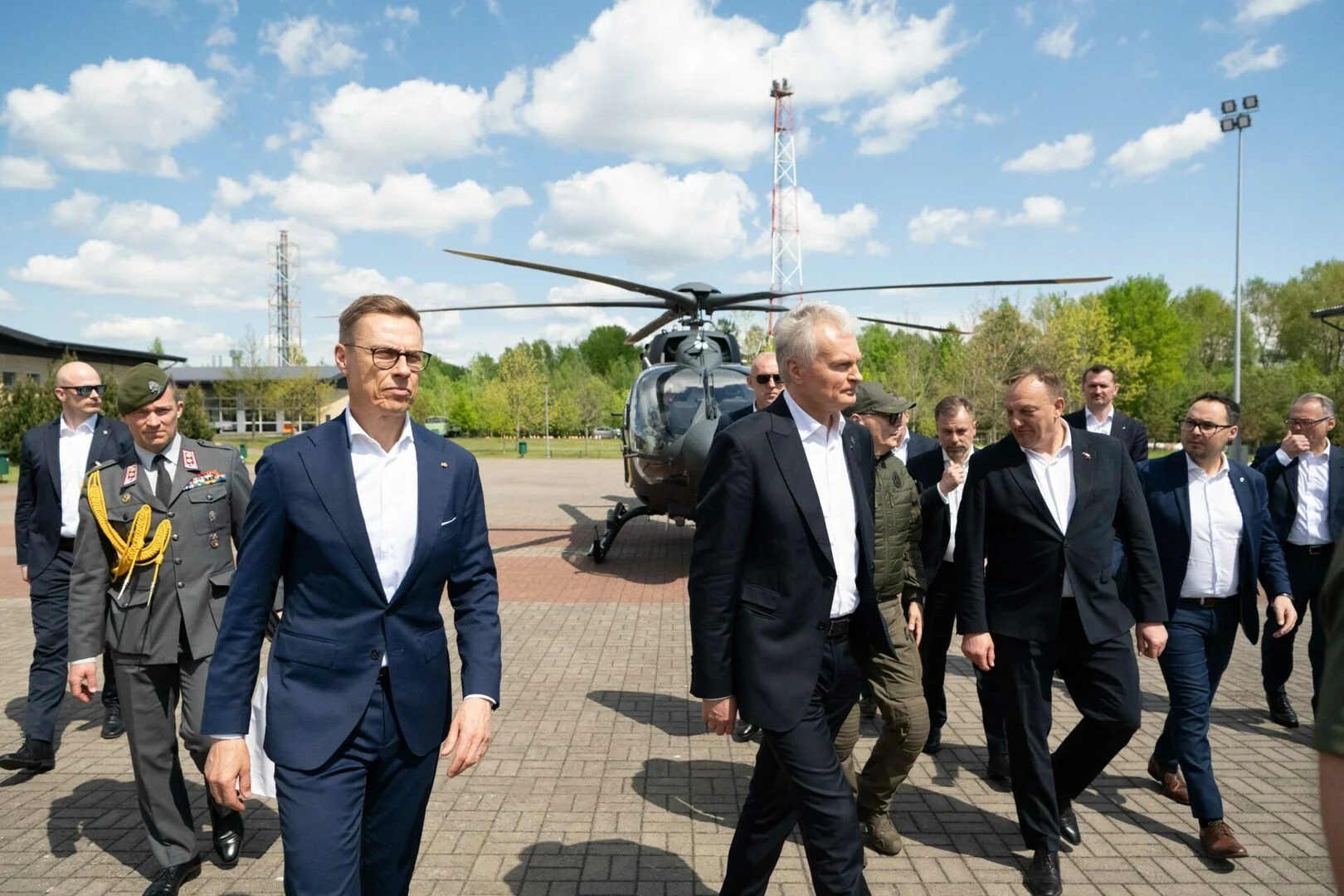
Lithuanian President Gitanas Nausėda has declared that his country now possesses what is likely the most secure external border in the European Union. The statement was made during a high-profile inspection of the Lithuania-Belarus frontier alongside Finnish President Alexander Stubb, who is currently on a state visit to the Baltic nation.
The two heads of state visited the Padvarionys border checkpoint and the State Border Guard Service (VSAT) school on Friday. The visit served as a platform to demonstrate the extensive security infrastructure Lithuania has implemented since 2021, when it became the first EU nation to face a sustained campaign of “instrumentalised migration” orchestrated by the Belarusian regime.
A High-Tech Shield Against Hybrid Threats
President Nausėda highlighted that the reinforcement of the EU and NATO external border remains a top national priority. According to the President, the combination of physical barriers and surveillance technology has reached a point where illegal crossings have been virtually eliminated.
“We are proud to have perhaps the best-protected external border in the EU,” Nausėda stated. “The measures we have implemented allow us to boldly claim that illegal migrants practically no longer enter EU territory through Lithuania’s external border, and the number of attempts themselves has significantly decreased.”
The infrastructure now covering the entire border with Belarus includes a formidable physical barrier supplemented by sophisticated video surveillance and night-vision equipment. An underground motion detection system provides a secondary layer of security, while mobile border guard units maintain a 24/7 patrol presence. This multi-layered approach was developed rapidly in response to the 2021 crisis, which saw thousands of migrants from the Middle East and Africa pushed toward the Lithuanian border by Belarusian authorities in what Western officials described as a hybrid attack.
Neutralising Drones and Strengthening Fortifications
Beyond managing migration, the Lithuanian border guard has been integrated into the national air defence framework. VSAT officers now have the legal authority and technical means to neutralise low-flying objects, including unmanned aerial vehicles (drones) and weather balloons. These are frequently used by organised crime groups for smuggling contraband, but they also represent a potential security risk for reconnaissance.
In a shift toward more traditional military deterrence, Lithuania is also focusing on “counter-mobility” measures. This involves the installation of permanent fortifications and physical obstacles along the perimeter to slow down any potential conventional military movement. These efforts are being closely coordinated with fellow Baltic states, Estonia and Latvia, to create a unified defensive line along the EU’s eastern flank.
The Nordic-Baltic Security Alliance
The visit underscored the deep security ties between Lithuania and Finland, two nations that share the challenge of managing long borders with aggressive neighbours. President Nausėda noted that Lithuania has essentially adopted the Finnish border protection model, benefitting from over 30 years of active cooperation between the two countries’ border services.
“It is a pleasure to emphasise that Lithuanian border guards have been cooperating actively and productively with Finnish border guards for more than 30 years,” Nausėda said. This partnership was further solidified just days ago with the signing of a new cooperation agreement between the respective border agencies. For Finland, which recently closed its own border with Russia due to similar instrumentalised migration tactics, the Lithuanian experience provides a vital blueprint for maintaining security under pressure.
Source: BNS



Comments