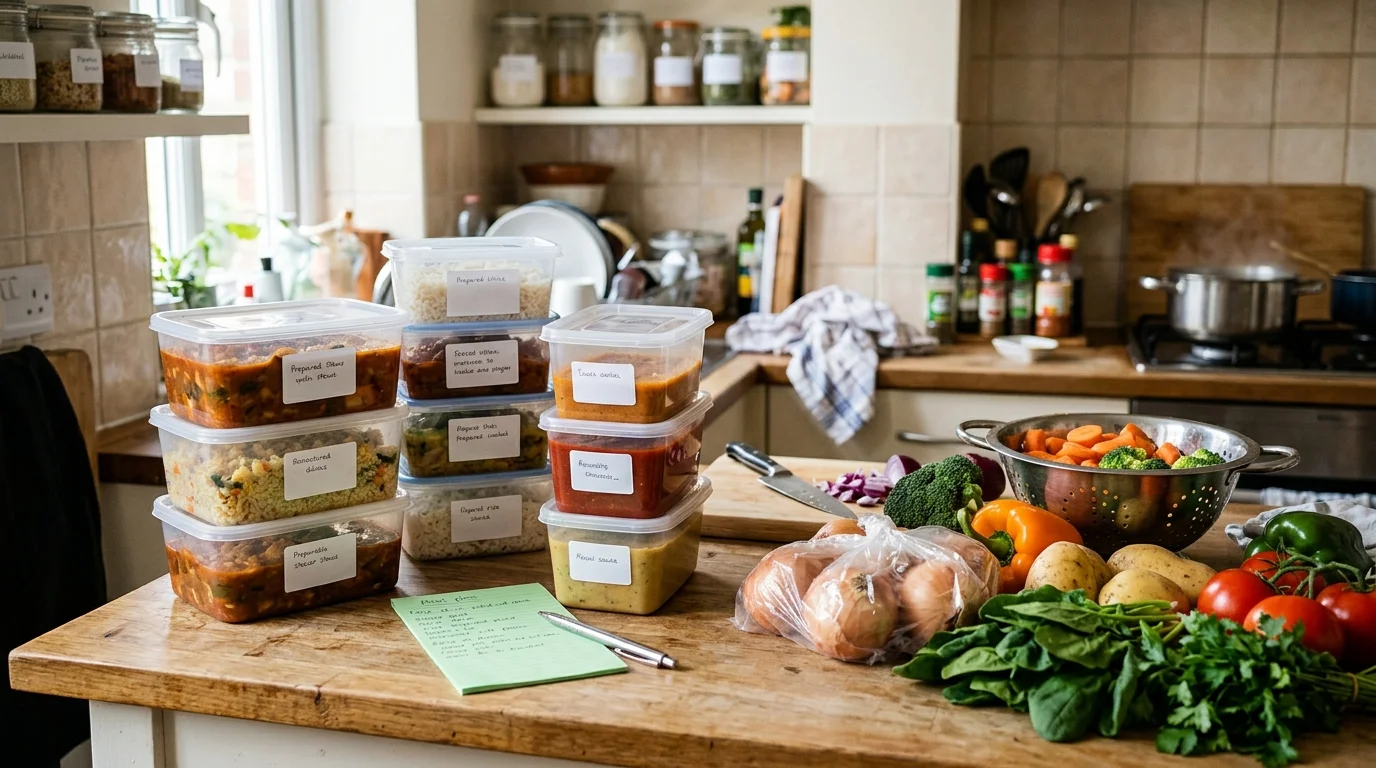
Switching to a freezer-first shopping strategy can reduce a household food bill by an estimated 20% to 30%, primarily by eliminating the ‘fresh waste’ that occurs when produce spoils before it can be used. While fresh food is often perceived as superior, modern flash-freezing techniques preserve nutrients effectively, and the lower unit price of frozen staples offers a significant buffer against fluctuating grocery costs.
To make a freezer plan work, you must look beyond the frozen pizza aisle. The real savings are found in ‘component’ freezing—buying base ingredients like vegetables, fruits, and proteins in bulk frozen formats. This approach requires a shift in how you shop, cook, and store food, but the financial impact is often immediate.
The Economics of the Freezer Aisle
The primary reason frozen food is cheaper than fresh produce isn’t necessarily lower quality; it is the reduction in logistical waste. Fresh produce has a high ‘shrinkage’ rate—supermarkets must price fresh spinach higher to account for the bags that will wilt and be thrown away. Frozen spinach, however, is processed at the source and has a shelf life of months, allowing retailers to pass those logistical savings to the consumer.
Furthermore, frozen items allow for precise portion control. When a recipe calls for a handful of peas or two florets of broccoli, you can take exactly what you need. With fresh produce, you are often forced to buy a specific pack size, leading to unused portions that eventually end up in the bin. According to the NHS ‘Eat Well’ guidelines, frozen vegetables count toward your five-a-day just as much as fresh ones, meaning there is no nutritional penalty for choosing the more economical option.
Essential Food Safety for Frozen Meal Planning
To reap the rewards of a freezer plan, safety must be the priority. The Food Standards Agency (FSA) emphasizes that while freezing acts as a ‘pause button’ for food safety, it does not kill bacteria; it merely stops them from growing.
Key safety protocols include:
* Temperature Consistency: Your freezer should be at -18°C or lower to maintain food quality and safety.
* Safe Defrosting: Never defrost food at room temperature on a kitchen counter. The safest method is to defrost food in the fridge overnight, which keeps the food at a safe, consistent temperature.
* The Refreezing Rule: You should not refreeze raw food that has been defrosted. However, once you have cooked defrosted meat into a meal (such as a bolognese or stew), you can safely freeze that cooked dish for later use.
* Labeling: Use a permanent marker to date everything. Most frozen items maintain peak quality for 3 to 6 months.
A Sample One-Week Freezer-First Meal Plan
This plan focuses on high-yield, low-cost frozen ingredients that minimize the need for mid-week ‘top-up’ shops.
| Meal Type | Frozen Components | Fresh Additions |
|---|---|---|
| Breakfast | Frozen mixed berries, frozen spinach (for smoothies) | Milk/Oats |
| Lunch | Frozen Mediterranean veg mix, frozen prawns or chicken strips | Wraps or Rice |
| Dinner | Frozen white fish fillets, frozen peas, frozen mash | Lemon/Herbs |
| Snacks | Frozen mango chunks or edamame beans | None |
By using frozen mixed vegetables for stir-fries and stews, you eliminate the time and waste associated with peeling and chopping. Frozen proteins like salmon fillets or chicken breasts are often sold in bags where each piece is individually quick-frozen (IQF), allowing you to cook exactly one portion at a time.
When Fresh Still Wins Over Frozen
Despite the savings, a 100% frozen diet is rarely practical or enjoyable. Texture is the main casualty of the freezing process. Foods with high water content, such as lettuce, cucumbers, and tomatoes, do not freeze well because the ice crystals destroy their cellular structure, leaving them mushy upon thawing.
For a balanced household budget, use the ’70/30 Rule’:
1. 70% Frozen/Pantry: Buy all ‘base’ vegetables (onions, peppers, corn, peas), fruits for cooking/smoothies, and bulk proteins from the freezer aisle.
2. 30% Fresh: Reserve your fresh budget for items where texture is critical—salads, whole citrus fruits, and fresh herbs that provide the ‘lift’ to a meal made from frozen components.
Maximizing Your Freezer Space
To make this plan sustainable, organization is vital. Remove bulky cardboard outer packaging from frozen goods and use reusable freezer bags to save space. Flattening bags of frozen mince or sauces allows them to be ‘filed’ vertically like books, maximizing the capacity of even small apartment freezers. This visibility prevents ‘forgotten’ food at the bottom of the drawer, ensuring your investment actually makes it to the dinner table.
Source: Food Standards Agency
Source check Household Finance Guide
This guide combines retail pricing logic with official food safety standards from the Food Standards Agency and the NHS.
- Cross-referenced nutritional claims with NHS Eat Well guidelines
- Verified food storage safety with Food Standards Agency protocols
- Analyzed supermarket unit pricing trends for 2024-2026
- Source
- Food Standards Agency
- Scope
- United Kingdom
- Updated
- 2026-05-19 08:28
Source check
Report a trust issue
Send a clear signal to community moderation if the source, facts or context need review.
Article contextPeople & topics#6
What do you think about this article?
Reader Ideas Newsroom
Have a sharper angle for this topic? Add it to the community idea board and let readers vote it up for editorial review.


/linkComments
8+ useful words can earn +10-60 DP; shorter replies can still publish without DP.