Can a Freezer-First Shopping Plan Reduce Your Weekly Food Bill?

Adopting a supermarket freezer plan can reduce a household food bill by 20% to 30%, provided the strategy focuses on high-waste items like soft fruits, vegetables, and proteins. While fresh produce is often perceived as superior, frozen alternatives offer price stability and a significantly longer shelf life, which directly combats the estimated £1,000 worth of food the average UK household throws away annually. However, success depends on understanding which items retain their quality and adhering to strict food safety standards.
The Financial Logic of the Frozen Aisle
The primary driver of savings in a freezer-led plan is the reduction of ‘unconscious waste.’ Fresh berries, bagged salads, and fish often have a shelf life of less than five days. When these items are bought frozen, the ‘use-by’ pressure is removed.
Price comparisons frequently favor the freezer. For example, frozen Atlantic salmon fillets can be up to 25% cheaper per kilogram than fresh equivalents. Similarly, staples like frozen spinach or sliced peppers offer better value because you only pay for the edible product—stems and seeds are removed before packaging. Retailers also tend to offer larger ‘value’ packs in the frozen section that would be impractical to buy fresh due to spoilage risks.
Essential Safety Rules for Long-Term Storage
To save money effectively, you must avoid the cost of food poisoning or spoiled stock. The Food Standards Agency (FSA) emphasizes that while freezing acts as a ‘pause button,’ it does not kill all bacteria; it merely stops them from growing.
Key safety protocols include:
* Temperature Control: Your freezer should be maintained at -18°C. If your freezer lacks a digital display, use a fridge-freezer thermometer to verify the temperature.
* Safe Thawing: Never defrost meat or fish at room temperature on a kitchen counter. The NHS and FSA recommend thawing food in the fridge overnight to keep it at a safe, consistent temperature (5°C or below).
* The Refreezing Rule: You should not refreeze raw meat or fish that has been defrosted. However, you can cook defrosted meat, and then freeze the resulting cooked meal.
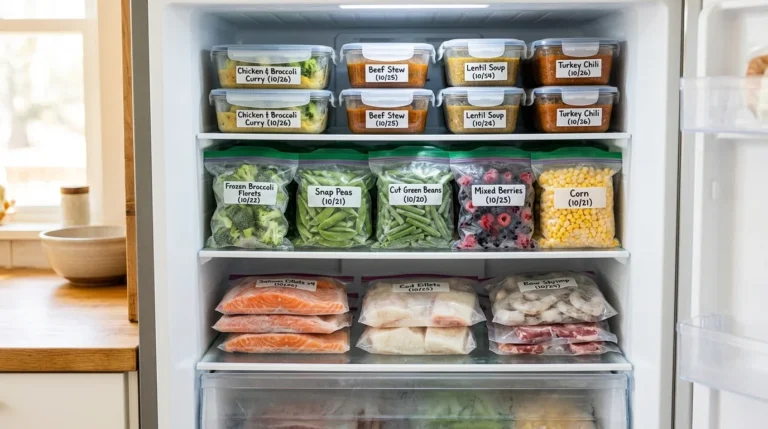
* Airtight Sealing: Use freezer-safe bags or containers to prevent ‘freezer burn’—dehydration caused by air reaching the food surface. While freezer-burnt food is safe to eat, the texture and flavor are often ruined, leading to waste.
A Seven-Day Freezer-First Meal Strategy
Implementing this plan requires a shift in how you shop. Instead of buying ingredients for specific nights, you buy ‘base’ frozen components that can be adapted.
| Day | Meal Concept | Primary Frozen Ingredients |
|---|---|---|
| Monday | Salmon & Broccoli Stir-fry | Frozen salmon fillets, frozen broccoli florets, frozen ginger/garlic paste |
| Tuesday | Beef or Lentil Chili | Frozen minced beef (or meat-free mince), frozen diced onions, frozen peppers |
| Wednesday | Spinach & Ricotta Pasta | Frozen chopped spinach (squeezed dry), frozen peas |
| Thursday | Leftover Chili Tacos | Uses the base from Tuesday |
| Friday | White Fish with Herbed Crust | Frozen white fish fillets, frozen parsley |
| Saturday | Homemade ‘Freezer’ Pizza | Frozen dough balls, frozen sweetcorn, frozen cooked chicken strips |
| Sunday | Mixed Vegetable Frittata | Frozen Mediterranean veg mix, frozen herbs |
Identifying the Hidden Costs and Quality Trade-offs
Not every frozen item represents a saving. ‘Ultra-processed’ frozen convenience meals—such as breaded nuggets or pre-made chips—can actually be more expensive per gram than making the same dish from scratch using fresh potatoes or chicken.
Furthermore, texture changes are inevitable. Frozen vegetables like courgettes or tomatoes become soft upon thawing because the water inside the cells expands and breaks the cell walls. These are excellent for soups, stews, and sauces but poor for salads. To maintain a balanced diet, the NHS Eatwell Guide suggests that while frozen, canned, and dried fruit and vegetables all count toward your 5-a-day, variety is key to ensuring a broad range of nutrients.
How to Transition Without Sacrificing Nutrition
Start by ‘shopping your freezer’ before heading to the supermarket. Most households have an ‘archaeological layer’ of forgotten food at the bottom of the drawer. Clear this out to make room for organized, transparent containers.
When at the store, check the ‘unit price’ (e.g., price per 100g) on the shelf edge. You will often find that ‘wonky’ frozen fruit—which may be oddly shaped but nutritionally identical—is significantly cheaper than the premium frozen ranges. By combining these frozen staples with small amounts of fresh, seasonal produce for crunch and texture, you can maintain a high-quality diet while significantly lowering your monthly outgoings.
Source: Food Standards Agency
Source check Evidence-Based Household Guide
This guide cross-references UK food safety standards from the Food Standards Agency with nutritional guidelines from the NHS to ensure budget advice remains safe and healthy.
- Verified price-per-unit logic for frozen vs fresh staples
- Confirmed storage temperature requirements from FSA
- Aligned meal planning with NHS Eatwell Guide
- Source
- Food Standards Agency
- Scope
- United Kingdom
- Updated
- 2026-05-23 04:39
Source check
Report a trust issue
Send a clear signal to community moderation if the source, facts or context need review.


Comments