Beyond the Frontline: Why ‘Day X’ Requires Every Citizen’s Skill

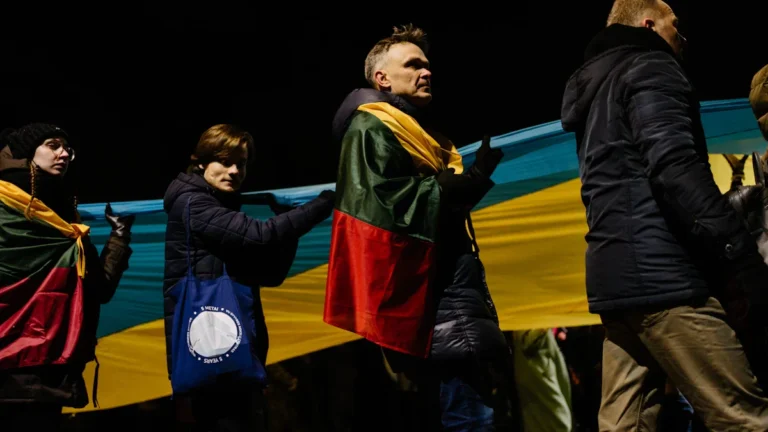
The question of what happens when a nation faces its darkest hour is no longer a hypothetical exercise for those living on Europe’s eastern flank. In Lithuania, the concept of ‘Day X’—the moment of a potential national emergency or invasion—has moved from the realm of military strategy into the heart of public discourse. This shift is not about stoking fear, but about a fundamental reimagining of what it means to be a citizen in a modern, resilient state.
Dominykas Kubilius, a well-known Lithuanian director, volunteer soldier, and public figure, is at the forefront of this conversation. As the moderator for the upcoming ‘Citizenship Festival’ (Pilietiškumo festivalis) on June 6th, he is challenging the public to look beyond the rifle. His message is clear: while a weapon is not for everyone, the skills of every individual will be indispensable if the worst-case scenario unfolds.
The Professional as a Protector
The traditional view of national defense often begins and ends with the boots of professional soldiers. However, the ‘Total Defense’ model being discussed in Lithuania suggests that the strength of a nation is found in its daily infrastructure. Kubilius argues that universal defense begins with a personal question: “What would I do?”
“Everyone must think about what they would do during the worst-case scenario,” Kubilius explains. “If someone feels that a weapon is not for them, they must do what they do best in their real life. A cook must feed, a teacher must care for children, a journalist must inform, and a businessman must mobilize support.” This perspective shifts the burden of national security from a specialized government department to the collective responsibility of the workforce. In this framework, professional excellence is rebranded as a form of civic resistance.
Maturity Over Fear
This approach to national readiness is echoed by Tomas Godliauskas, Lithuania’s Vice-Minister of National Defense. For the government, the goal is to foster a society that is conscious rather than panicked. Godliauskas emphasizes that universal defense is not an invitation to live in perpetual anxiety, but a call to live responsibly and calmly, knowing that individual preparation is a vital cog in the state’s security machinery.

This psychological dimension is a key focus of the festival. Rosita Kanapeckaitė, a psychologist and reserve major, will address the importance of community cohesion and mental fortitude. In a crisis, the breakdown of social trust can be as damaging as physical infrastructure failure. By focusing on how different generations and professions can support one another, the festival aims to build a ‘psychological armor’ for the public.
A Cultural Anchor for Civic Duty
The festival, now in its third year, is held at the historic Leonpolis Manor in the Ukmergė district. It is an initiative of the ‘Lithuanian Millennium Rotary Club’ and serves as a unique intersection of military briefing, intellectual debate, and cultural celebration. The presence of figures like Skirmantas Malinauskas, a prominent activist and blogger, and Colonel Gintaras Koryzna, former commander of the Lithuanian Riflemen’s Union, underscores the gravity of the event.
Yet, the festival also integrates high culture to reinforce national identity. A highlight of this year’s program is a live dialogue of poetry and music featuring Professor Vytautas Landsbergis—the first head of state after Lithuania’s restoration of independence—and his daughter, Birutė Landsbergytė-Cechanavičienė. Their performance, accompanied by cellist Julius Kletas Jonušas, serves as a reminder that the culture being defended is as important as the territory itself.
The Global Context of Resilience
For readers in the UK and across Europe, the Lithuanian ‘Citizenship Festival’ offers a case study in modern national resilience. As geopolitical tensions rise, the ‘whole-of-society’ defense model—pioneered by the Nordic and Baltic states—is increasingly viewed as a blueprint for democratic survival. It suggests that a nation’s ultimate deterrent is not just its arsenal, but the quiet, organized readiness of its teachers, doctors, and engineers to keep the heart of the country beating, no matter the pressure.
Source: BNS
Source check Event Intelligence
This report is based on official announcements from the Citizenship Festival organizers and statements from the Lithuanian Ministry of National Defense.
- Confirmed event date and location at Leonpolis Manor.
- Verified roles and titles of all mentioned government and military officials.
- Cross-referenced the 'Total Defense' concept with current Baltic security doctrines.
- Source
- bns
- Scope
- Ukmergė, Lithuania
- Updated
- 2026-05-18 13:06
Source check
Report a trust issue
Send a clear signal to community moderation if the source, facts or context need review.


Comments