Nottingham maps 1,000th cave in historic underground milestone
A hidden world carved into the sandstone beneath Nottingham has reached a significant numerical landmark, with the city officially recording its 1,000th man-made cave. The milestone follows a 15-year investigation by City Archaeologist Scott Lomax, whose research has transformed the understanding of the subterranean landscape that defines the city’s history.
Beneath the modern retail units and busy thoroughfares lies a network of voids shaped by over a millennium of human activity. This recent confirmation reinforces the city’s standing as the European City of Caves, a title supported by the fact that no other European city possesses such a vast and well-preserved network of man-made underground structures. Unlike the stone-built heritage of York or Chester, Nottingham’s history is etched directly into the earth.
Mapping a millennium of subterranean history
The ongoing research led by Scott Lomax utilizes a combination of historic manuscripts, Victorian-era maps, and modern archaeological investigations triggered by urban redevelopment. Many of these sites were previously recorded as destroyed or lost during the construction of modern Nottingham. However, detailed site visits and physical excavations frequently reveal that these caves survive, often hidden behind later brickwork or sealed beneath rubble.
These spaces have performed various roles throughout the centuries. While many began as storage areas or beer cellars, others were utilized as industrial workshops, tanneries, and maltings. During the 20th century, the network took on a defensive role, providing air-raid shelters for residents during the World Wars. The preservation of these sites offers a rare glimpse into the daily lives of ordinary citizens rather than just the elite.
Recent discoveries from beer cellars to sand mines
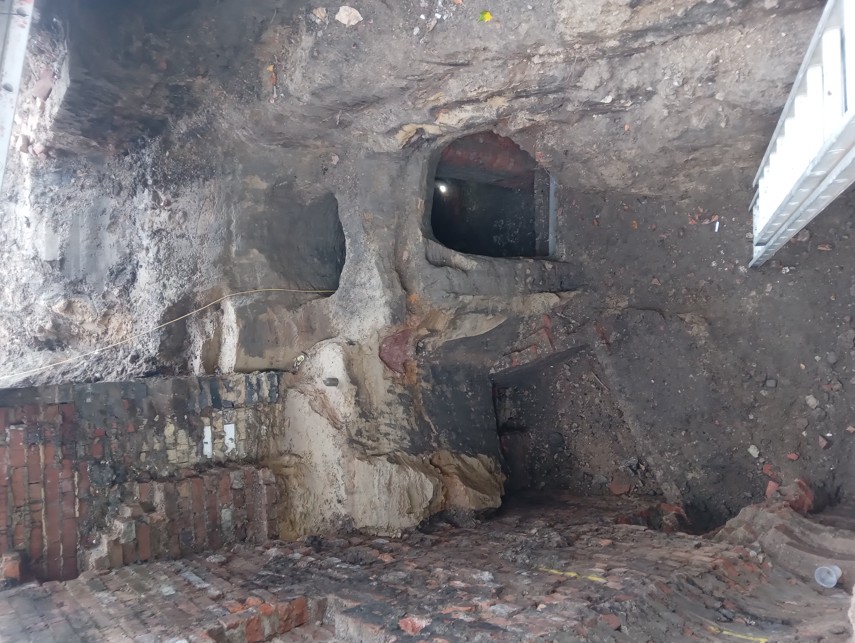
Several specific sites have contributed to reaching the 1,000-cave milestone. In the Lace Market, a cave on Stoney Street was rediscovered during redevelopment works despite earlier records suggesting it had been demolished. Investigations secured by the heritage team proved the structure remained intact, allowing it to be preserved within the new building design.
On Brook Street, documentary research led to the uncovering of a cave during utility works by Severn Trent. Believed to date from approximately 1830, the space served as a beer cellar for the former Flying Horse beer house. Similarly, at Goose Gate, a shaft and blocked entrance were identified during a mandatory heritage investigation, revealing an early 19th-century cellar that has now been protected.
Further out on Mansfield Road, a sand mine recently identified is thought to date back to the 18th century. These discoveries highlight that the underground map of the city is far from complete, with new voids appearing as modern infrastructure is updated.

Protecting the city’s hidden heritage in modern planning
The documentation of these 1,000 caves serves a practical purpose beyond historical curiosity. Nottingham City Council maintains a dedicated caves policy within its planning framework, ensuring that any new development accounts for the potential existence of underground structures. This policy requires developers to investigate and, where possible, protect caves encountered during construction.
Councillor David Mellen, Executive Member for Leisure, Culture and Tourism, noted that the milestone is a testament to the expertise of the heritage team in protecting history for future generations. The work continues to strengthen the city’s reputation as a unique heritage destination while ensuring modern growth does not come at the expense of the past.
The search for further caves remains active. Many structures are believed to exist beneath private properties, hidden behind basement walls or under garden paving. Residents who possess historic photographs, old maps, or information regarding potential cave entrances on their land are encouraged to contact the city’s heritage team to assist in the ongoing mapping of this hidden landscape.
Source: Nottingham City Council
Comments