Northern Lights UK Forecast: Best Times to See the Aurora Tonight
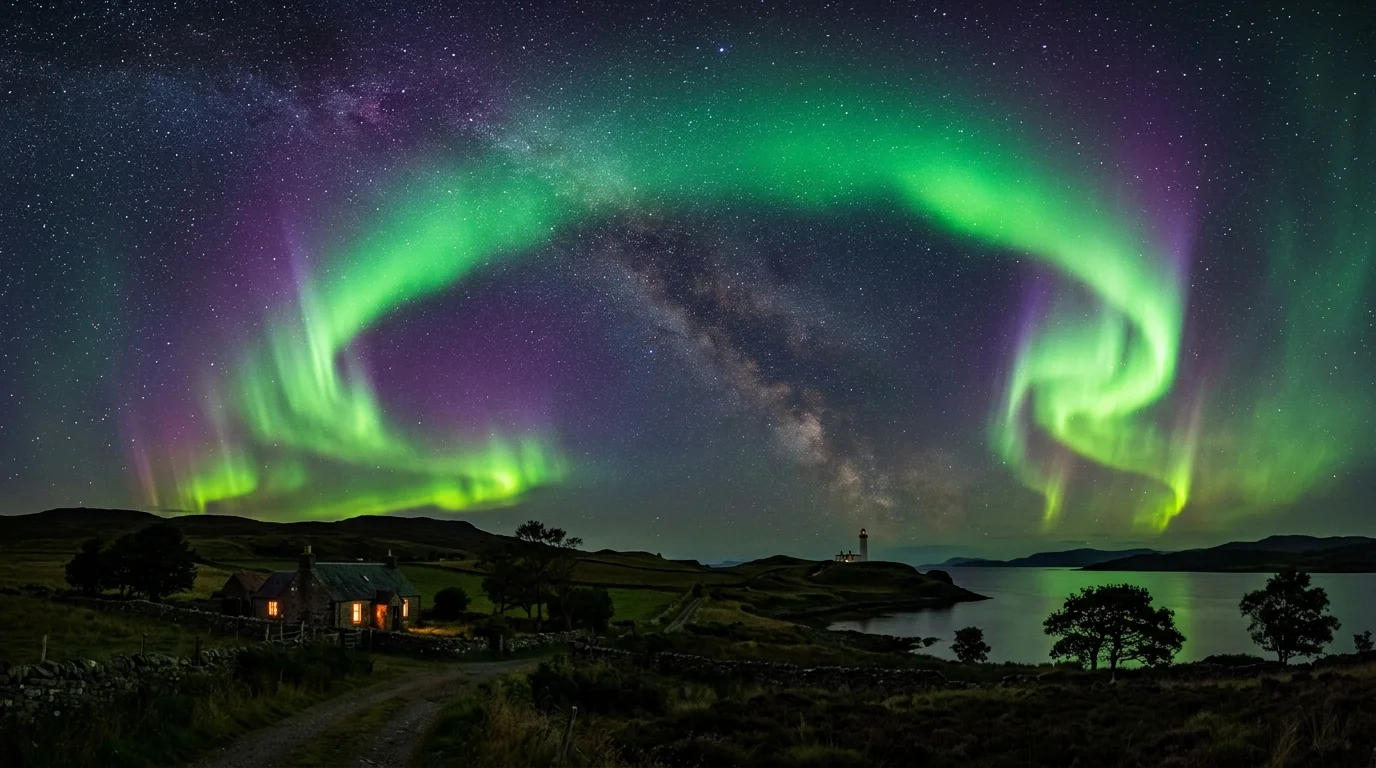
Following a weekend of historic solar activity, the Met Office indicates that the Aurora Borealis may remain visible across parts of the United Kingdom on Monday night, May 11, 2026. While the extreme peak of the solar storm has begun to subside, the presence of significant “sub-storms” means skywatchers still have a viable chance to witness the phenomenon, particularly in northern regions and areas with high elevation.
Optimal Viewing Windows and K-Index Levels
The most favorable time to head outdoors is between 10:00 PM and 2:00 AM. During this window, the sky is at its darkest, and geomagnetic activity often reaches its nightly peak. Meteorologists are monitoring the K-index—a scale from 0 to 9 used to characterize geomagnetic storms. For Monday night, levels are expected to fluctuate between Kp 4 and Kp 6. While a Kp 5 is generally required to see the lights in Scotland and Northern England, a surge toward Kp 6 could push the visibility further south into the Midlands.
Regional Forecast and Cloud Cover
Visibility depends heavily on local weather conditions. Even with high solar activity, cloud cover can obscure the view.
| Region | Forecasted Visibility | Sky Conditions |
|---|---|---|
| Scotland & Highlands | High | Mostly clear intervals |
| Northern England | Moderate | Scattered clouds |
| Midlands & Wales | Low-Moderate | Increasing cloud cover |
| Southern England | Low | High probability of cloud |
| Northern Ireland | Moderate | Clear spells late night |
Practical Tips for Successful Sightings
To maximize your chances of seeing the Aurora, you should move away from the light pollution of cities and towns. Dark-sky parks or coastal areas with a clear view of the northern horizon are ideal.
Because the human eye often struggles to pick up the vibrant greens and reds in low-light conditions, using a camera can reveal colors that are invisible to the naked eye. Set your smartphone or DSLR to a “Night Mode” or manual long-exposure setting (between 5 and 15 seconds) and use a tripod to prevent blurring.
What to Watch for Next
Keep an eye on live magnetometers and short-term forecast tools provided by the Met Office and NOAA. Solar activity is unpredictable; a sudden “sub-storm” can cause the Aurora to brighten significantly for short durations, even if the general forecast suggests waning activity. If the K-index spikes unexpectedly after midnight, even those in southern latitudes should look toward the northern horizon.
Frequently Asked Questions
Why is there still a chance to see the Northern Lights tonight after the peak solar activity has ended?
Although the primary solar storm has begun to fade, the Earth’s magnetic field remains highly unsettled due to ‘sub-storms.’ These secondary bursts of energy can trigger the Aurora Borealis even after the main event. Tonight’s forecast of Kp 4 to Kp 6 means there is still enough geomagnetic pressure to push the auroral oval over the UK, especially in regions with low light pollution.
How can I see the Aurora if the lights aren’t visible to the naked eye?
In many parts of the UK, the Aurora may appear as a faint, colorless ‘mist’ to the human eye. To reveal the colors, use your smartphone’s Night Mode or a manual long exposure (set between 5 and 10 seconds). Digital sensors are far more sensitive to the green and red spectrums than human retinas; if your camera shows a green glow on the screen, you are looking at the Aurora.
Will tonight’s geomagnetic activity cause any local disruptions to GPS or internet in the UK?
At Kp 5 or 6 levels, major infrastructure failures are unlikely. However, residents may experience minor ‘GPS drift’ or slight fluctuations in satellite-based services. The most significant local impact will likely be increased traffic and congestion near coastal ‘dark-sky’ spots and high-elevation viewpoints, so skywatchers should plan for busier-than-usual rural roads.
Where can I find real-time updates to know exactly when to head outside?
To save time, monitor the AuroraWatch UK (Lancaster University) app or the Met Office Space Weather dashboard for live alerts. Specifically, look for the ‘Bz’ value of the Interplanetary Magnetic Field; if this number turns negative (Southward), it acts as a ‘trapdoor’ for solar energy, significantly increasing the likelihood of a visible display within the hour.
Source: metoffice.gov.uk


Comments