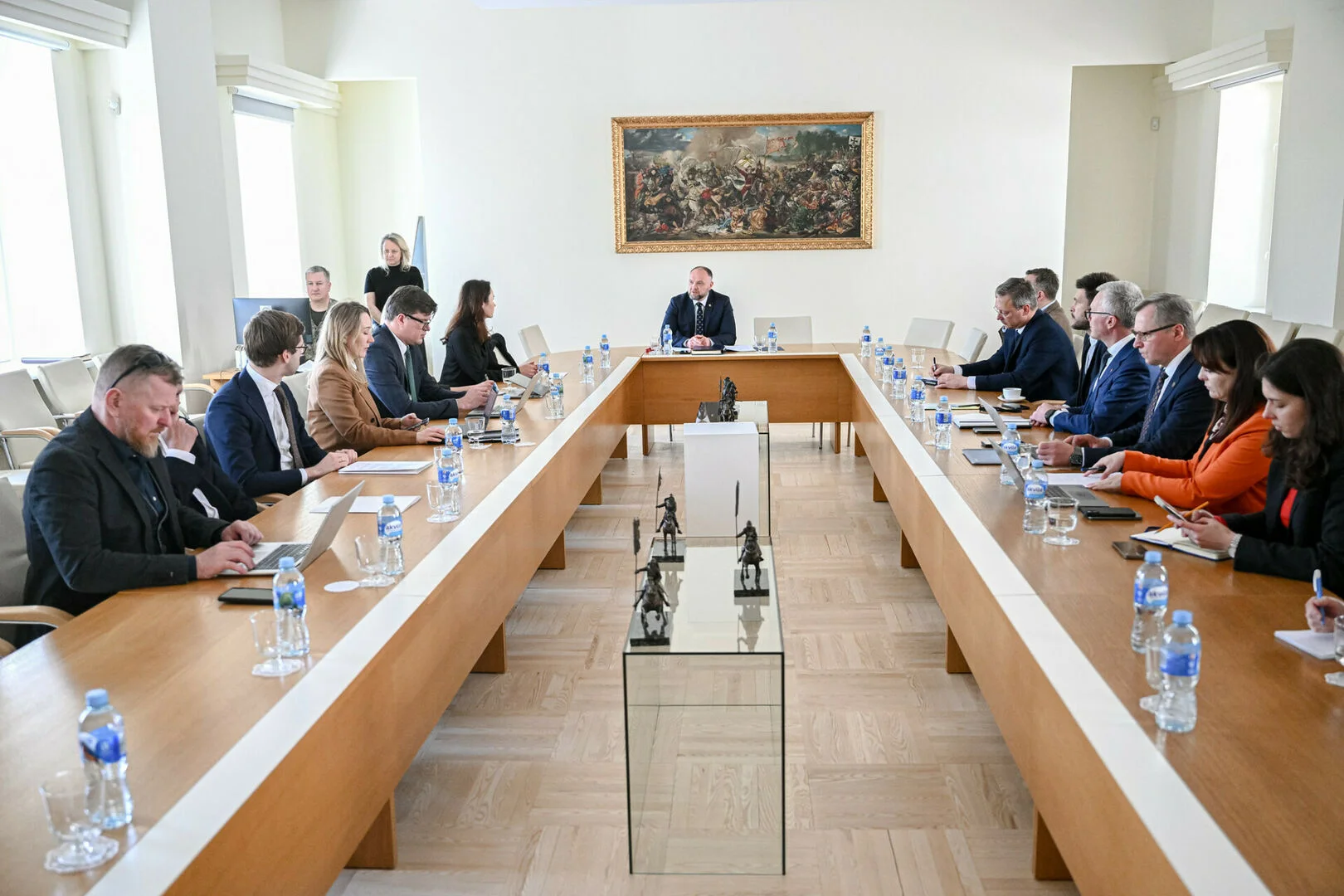
The Lithuanian government has officially launched an inter-institutional working group tasked with ensuring that the expansion of military infrastructure in the Kapčiamiestis and Tauragė regions translates into tangible benefits for local residents. The move comes as the Baltic nation rapidly scales up its defense capabilities, balancing national security requirements with the daily needs of communities in the Lazdijai, Jurbarkas, and Tauragė districts.
On May 14, representatives from several ministries—including Defense, Transport, Economy, and Health—met for the first time to coordinate projects ranging from road reconstruction to energy grid upgrades. The initiative aims to mitigate the disruption caused by new military training grounds while stimulating regional economies.
Priority for Road and Energy Infrastructure
One of the most immediate benefits for residents in the Lazdijai and Jurbarkas districts will be a significant acceleration of road infrastructure projects. The Ministry of Transport has been tasked with prioritizing the design, repair, and construction of local roads to ensure that increased military mobility does not compromise civilian safety or ease of travel. This includes improving the overall condition of regional routes that have long been awaiting investment.
In addition to transport, the energy sector is set for modernization. In the Lazdijai district, the Ministry of Energy, alongside the operator ESO, plans to replace vulnerable overhead power lines with underground cables where possible. This transition is intended to provide a more stable and resilient electricity supply, reducing the frequency of outages during extreme weather—a common concern for rural Baltic communities.
Economic Stimulus and Healthcare Access
The expansion of military sites is also being framed as an economic opportunity. The Ministry of Economy and Innovation is collaborating with local municipalities to launch business incentive programs and attract new investments to the affected areas. Furthermore, the Ministry of Health has been directed to ensure that healthcare services remain accessible and are potentially enhanced to meet the needs of both the growing military presence and the local population.
To ensure these promises are kept, the government has established a dedicated funding mechanism. Municipalities hosting military polygons will receive a direct portion of the defense budget, proportional to the size of the military territories within their borders. Between 0.3% and 0.5% of the national defense budget (as a percentage of GDP) will be earmarked specifically for social and engineering infrastructure in these regions.
Financial Allocations for Regional Development
The following table outlines the planned annual investments and program budgets through 2030 for municipalities hosting military training grounds:
| Investment Area | Planned Annual Budget / Total |
|---|---|
| Civil Protection and Critical Infrastructure | €25 million annually |
| Mobilization Officer Functions | Up to €5 million |
| Youth Riflemen and Citizenship Courses | At least €1.3 million |
| Civil Resistance Training | At least €150,000 |
| Social and Engineering Infrastructure | 0.3%–0.5% of Defense GDP |
Strengthening Regional Resilience
Beyond physical infrastructure, the government plans to establish “Universal Defense Centers” in these municipalities. These centers are expected to create new jobs and provide specialized training for local residents, enhancing both cyber security and civil resistance capabilities.
Vice Minister of National Defense Bronius Bieliauskas emphasized that the development of military infrastructure must be paired with a clear commitment to the people. The working group’s primary task is to ensure that the strengthening of the Lithuanian Armed Forces brings a measurable improvement to the quality of life in the regions, fostering a sense of security that is both military and social in nature. By 2030, these measures are expected to have fundamentally transformed the infrastructure landscape of the Lazdijai, Jurbarkas, and Tauragė districts.
Source: BNS
Article contextPeople & topics1#5
What do you think about this article?
Reader Ideas Newsroom
Have a sharper angle for this topic? Add it to the community idea board and let readers vote it up for editorial review.




/linkComments
8+ useful words can earn +10-60 DP; shorter replies can still publish without DP.