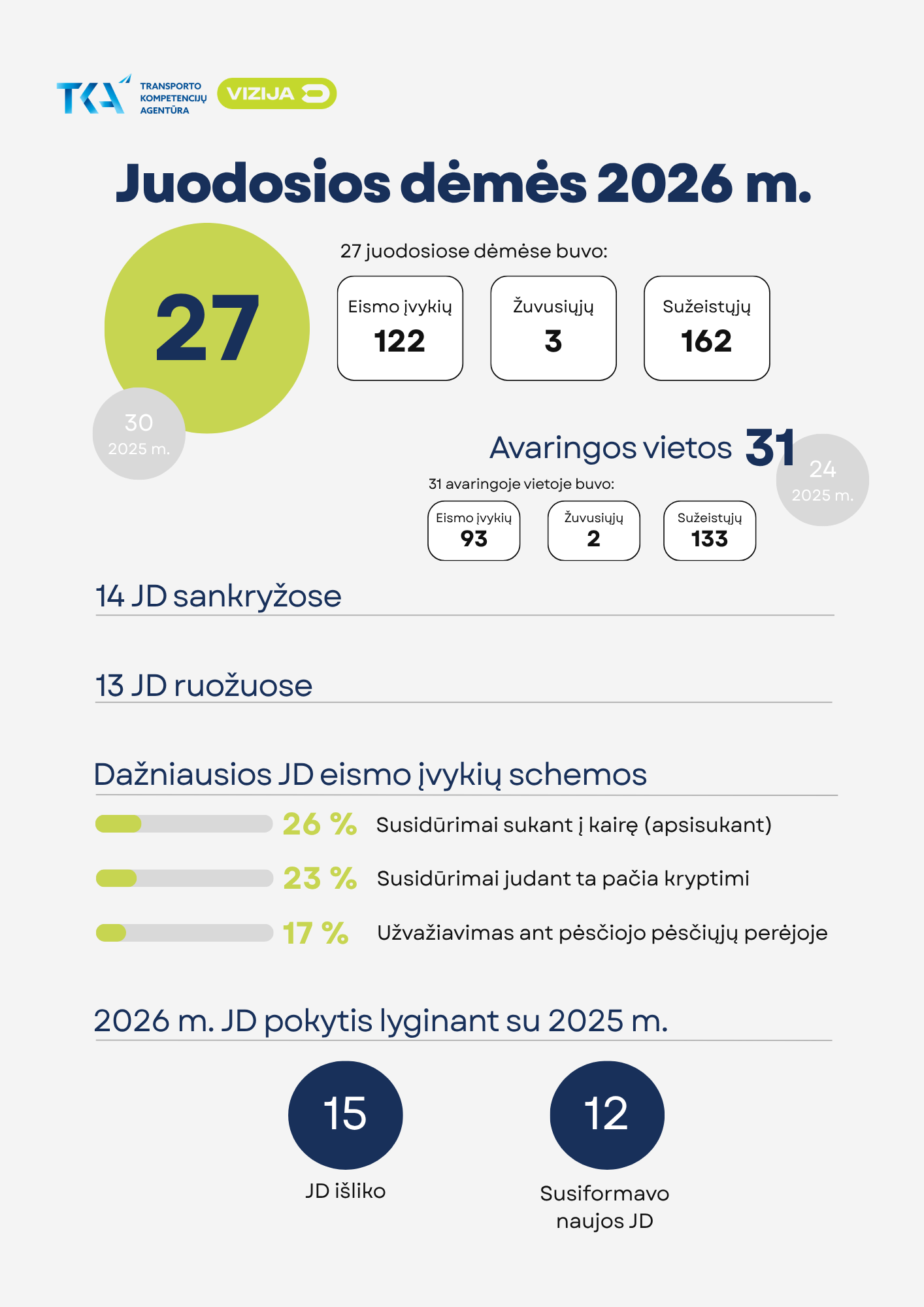
Lithuania has recorded a 10% reduction in its most dangerous road sections, known as “black spots,” according to the latest data for 2026. While the number of these high-risk zones fell from 30 to 27, transport officials warn that persistent infrastructure flaws and driver negligence continue to pose a significant threat to life. The reduction is seen as a victory for targeted safety interventions, yet it highlights the long road ahead for the Baltic nation’s “Vision Zero” ambitions.
According to the Transport Competence Agency (TKA), which monitors the country’s state-level roads, the 27 identified black spots were responsible for 122 recorded traffic accidents in the current reporting period. These incidents resulted in three fatalities and 162 injuries. While the numerical decrease is a positive trend, the data reveals a stubborn core of danger: 15 of these locations have remained on the list for multiple years, suggesting that some infrastructure problems require more than just minor adjustments.
Defining the Danger Zones
In the Lithuanian context, a “black spot” is defined with specific statistical rigor. It refers to a road section or intersection where at least four traffic accidents involving injury or death have occurred within a four-year period. This data-driven approach allows the government to prioritize funding for the most lethal stretches of tarmac.
| Statistical Comparison | 2025 Data | 2026 Data |
|---|---|---|
| Total Identified Black Spots | 30 | 27 |
| Persistent (Recurring) Spots | N/A | 15 |
| New Black Spots Formed | N/A | 12 |
| Fatalities in Black Spots | N/A | 3 |
The geography of risk is varied, but the highest concentration of danger remains on major arteries. Of the 27 spots identified, 14 are located on main motorways, nine on national roads, and four on regional routes. Notably, the A12 motorway near the city of Tauragė has been flagged as a particular concern, housing three separate black spots within a limited stretch.
Infrastructure Flaws: Left Turns and Crossings
The TKA’s investigation into these high-accident areas points to several recurring structural failures. The most prominent issue involves unsafe left-hand turns and U-turns, which accounted for 26% of all accidents within these zones. When drivers are forced to cross oncoming high-speed traffic without dedicated lanes or signal protection, the margin for error disappears.
Pedestrian safety also remains a critical vulnerability. Many black spots are characterized by crossings that span more than two lanes of traffic or lack sufficient directional lighting. To combat this, the Ministry of Transport and Communications has set an ambitious target to modernize 500 unsafe pedestrian crossings across the country. Proposed solutions include the installation of safety islands, the conversion of traditional intersections into roundabouts, and the implementation of clearer horizontal markings to define priority for cyclists and pedestrians.
The Human Element in Road Safety
While engineering can mitigate many risks, the data suggests that infrastructure alone cannot solve the problem. Five of the 27 black spots were formed primarily due to illegal driver behavior rather than road design. This includes incidents involving intoxicated drivers, individuals operating vehicles without a valid license, or hit-and-run offenses.

“Every black spot that disappears from the map means more people returning home safely,” says Dovilė Sujetaitė, Vice Minister of Transport and Communications. “However, our goal is to halve the number of these spots. To achieve long-term results, we must combine infrastructure investment with increased driver responsibility and education.”
As Lithuania continues to update its national black spot map with municipal data, the focus shifts toward proactive prevention. By identifying “accident-prone areas” (31 of which were also identified this year) before they meet the full “black spot” criteria, authorities hope to intervene with safety measures before the next tragedy occurs. For international observers and residents alike, the trend suggests that while Lithuanian roads are becoming objectively safer, the remaining risk remains concentrated in predictable, fixable locations.
Source: ELTA
Article contextPeople & topics2#4
What do you think about this article?
Reader Ideas Newsroom
Have a sharper angle for this topic? Add it to the community idea board and let readers vote it up for editorial review.


/linkComments
8+ useful words can earn +10-60 DP; shorter replies can still publish without DP.