Lithuania and Sweden Bolster Security Ties Amid Regional Threats: what residents need to know
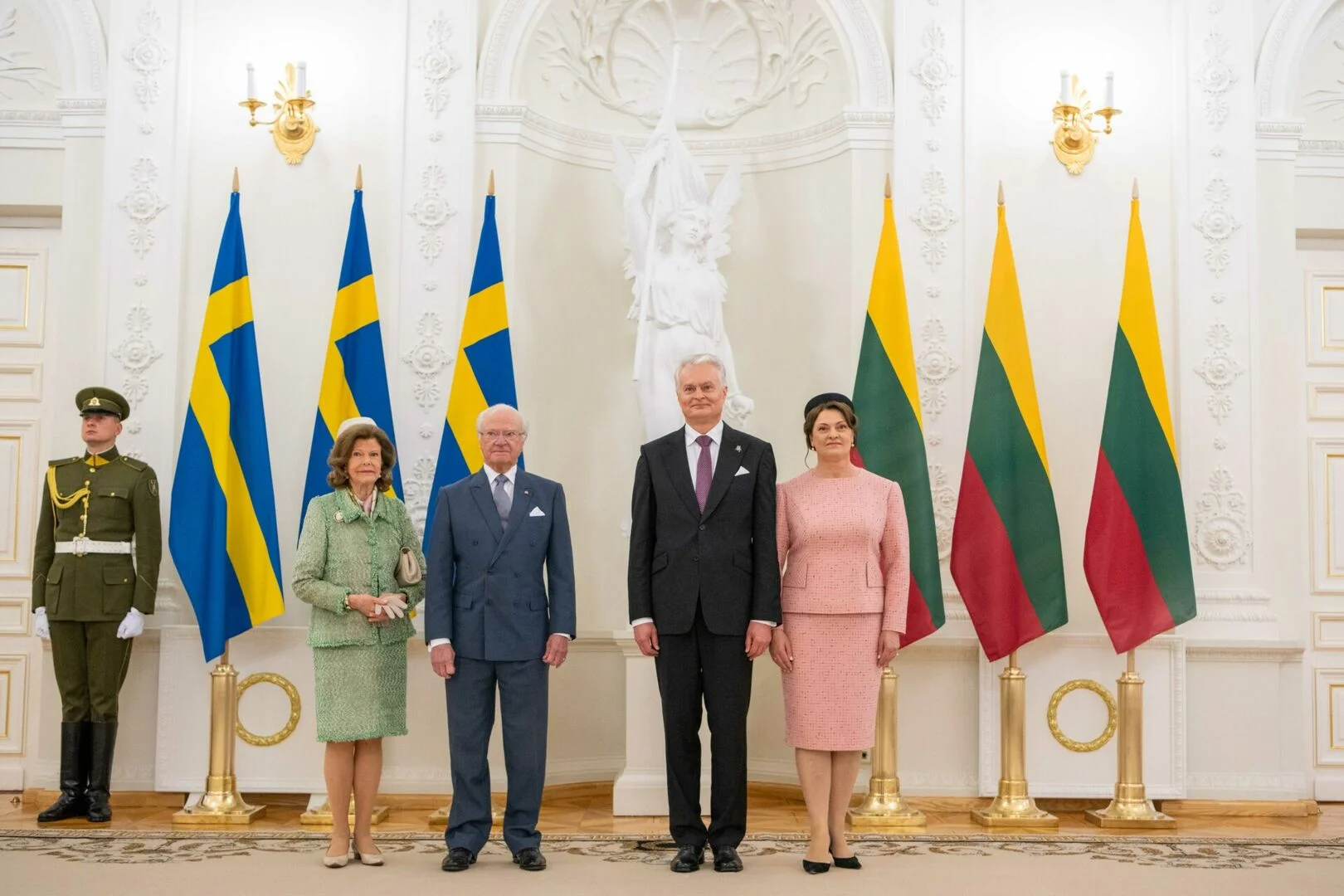
Lithuanian President Gitanas Nausėda and First Lady Diana Nausėdienė met with King Carl XVI Gustaf and Queen Silvia of Sweden on Monday, marking the second high-level encounter between the two heads of state in just two weeks. This frequency of diplomatic engagement underscores a rapidly deepening strategic partnership between the Baltic and Nordic nations as they navigate a volatile security landscape in Northern Europe.
During the meeting, President Nausėda emphasized that the security of the Baltic States is now inextricably linked to that of the Nordic region. This alignment has become increasingly critical following Sweden’s recent accession to NATO, which has effectively transformed the Baltic Sea into what some analysts call a ‘NATO lake,’ significantly shifting the geopolitical balance against Russian influence in the area.
Strengthening the Baltic-Nordic Security Axis
The discussions centered heavily on defense and regional resilience. President Nausėda and King Carl XVI Gustaf reviewed ongoing cooperation in security, energy independence, and the protection of critical infrastructure. The Lithuanian leader highlighted that a robust partnership between the Nordic and Baltic countries (often referred to as the NB8) serves as the primary foundation for regional stability.
During the ongoing state visit, particular attention was paid to the evolving nature of hybrid threats emanating from Russia and Belarus. President Nausėda briefed the Swedish monarch on the ‘instrumentalization of illegal migration’—a tactic where migrants are pushed across borders to destabilize EU member states—and recent incidents involving ‘smuggling balloons.’ These balloons, which have entered Lithuanian airspace from the east, are viewed not only as a customs challenge but as a potential risk to civil aviation and a tool for testing air defense responses.
To counter these provocations, the President called for the continued strengthening of NATO’s eastern flank. He stressed the importance of maintaining a ‘strong transatlantic bond’ and ensuring that Western attention remains fixed on the conflict in Ukraine, despite competing global crises.
Strategic Economic and Cultural Integration
Beyond military and security concerns, the meeting highlighted Sweden’s role as a vital economic pillar for Lithuania. Sweden remains one of the largest foreign investors in the country, with significant interests in the banking, telecommunications, and manufacturing sectors. President Nausėda noted that there is substantial room for further growth in high-tech sectors, including innovation and renewable energy, which are crucial for the region’s long-term energy security.
The historical and cultural ties between the two nations were also celebrated. The Baltic Sea has served as a conduit for trade and cultural exchange for centuries, and today, this shared history is reflected in the active Lithuanian diaspora living in Sweden. The President praised the role of the Lithuanian community in Sweden for fostering people-to-people links that complement the formal diplomatic and economic ties between Vilnius and Stockholm.
Future Outlook for Regional Cooperation
The meeting concludes a period of intense diplomatic activity aimed at synchronizing the defense strategies of the Baltic and Nordic states. As Sweden fully integrates into NATO’s military structures, the focus is expected to shift toward practical joint exercises and the synchronization of maritime surveillance in the Baltic Sea.
President Nausėda expressed his gratitude to the Swedish Royal Family for their personal contribution to the strengthening of bilateral relations. The visit serves as a precursor to further technical-level meetings between Lithuanian and Swedish officials regarding energy grid synchronization and the protection of undersea cables—infrastructure that has become a focal point of regional security concerns following recent sabotage incidents in European waters.
Source: BNS
Source check Diplomatic Reporting
This report is based on official communications from the President's Office regarding the meeting with the Swedish Royal Family.
- Verified the occurrence of the meeting between President Nausėda and King Carl XVI Gustaf.
- Confirmed the focus on hybrid threats, including 'smuggling balloons' and migration issues...
- Cross-referenced Sweden's status as a top investor in the Lithuanian economy.
- Source
- bns
- Scope
- Lithuania
- Updated
- 2026-05-18 14:56
Source check
Report a trust issue
Send a clear signal to community moderation if the source, facts or context need review.



Comments