Croydon residents face split power after local election results

Croydon Council has transitioned into a state of “no overall control” following the 2026 local elections, establishing a complex political environment for the borough. While Executive Mayor Jason Perry secured a continued mandate for the Conservative Party, the subsequent council seat count revealed that no single party holds a majority in the chamber. This split mandate creates a unique governance challenge where the executive head and the legislative body must find common ground to pass key policies.
The final results, verified on Saturday, May 9, show that the Labour Party has become the largest group within the council, holding 30 of the 70 available seats. The Conservative Party follows with 28 seats. The Green Party saw a notable increase in representation, securing 8 seats, while the Liberal Democrats and Reform UK both earned 2 seats each. This distribution ensures that the smaller parties now hold significant leverage in council votes.
Breakdown of the 2026 council chamber
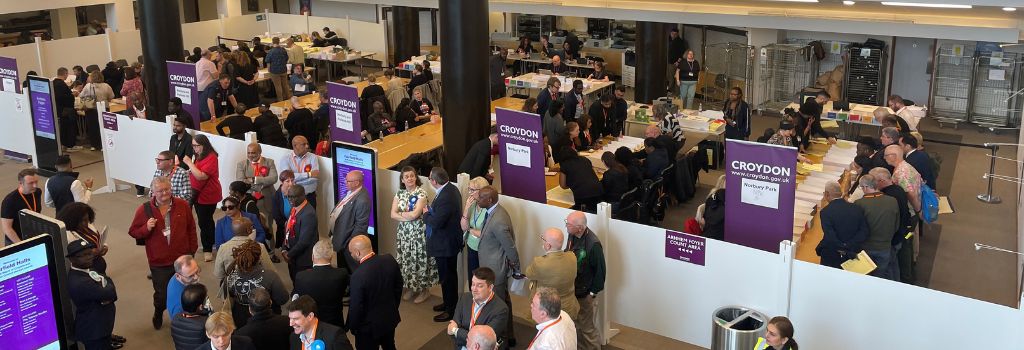
The 2026 election saw a voter turnout of 41.02%, with 286,933 residents casting ballots. This level of engagement makes the Croydon count one of the largest in London, reflecting high local interest in the borough’s future direction. The ward-by-ward breakdown confirms that the political map of Croydon has become increasingly fragmented compared to previous election cycles.
| Political Party | Number of Councillors |
|---|---|
| Labour Party | 30 |
| Conservative Party | 28 |
| Green Party | 8 |
| Liberal Democrats | 2 |
| Reform UK | 2 |
This composition means that even if the Conservatives and Labour were to vote as unified blocs, neither can reach the threshold required for a simple majority without the support of the Green Party, Liberal Democrats, or Reform UK members.
Governance under a directly-elected mayor
Croydon operates under a directly-elected mayor system, which was first adopted in 2022. Under this model, Mayor Jason Perry holds the executive power to propose the council’s budget and set the strategic policy framework. However, the council chamber retains the power to scrutinize these decisions and, in specific circumstances, block or amend them.
In a “no overall control” scenario, the Mayor faces a legislative body where the opposition parties collectively outnumber his own. While the Mayor can appoint a cabinet of his choosing, passing a budget typically requires the approval of the full council. If two-thirds of the councillors agree on an alternative budget, they can override the Mayor’s proposal, making cross-party negotiation a mathematical necessity for the 2026-2030 term.
Strategic implications for borough policy
The lack of a majority suggests that the next four years will be characterized by issue-by-issue voting rather than a rigid party-line agenda. The Green Party, with its eight seats, is positioned to influence environmental initiatives, urban planning, and social housing policies. Their growth reflects a shifting priority among Croydon voters toward sustainability and local accountability.
Similarly, the presence of Liberal Democrat and Reform UK councillors, though small in number, adds further diversity to the debate. These representatives may act as swing voters on specific local issues, such as traffic management schemes, business rates, or community safety programs. The Conservative administration will likely need to engage in early consultations with these groups before bringing major motions to the floor.
Immediate steps for the new administration
The newly elected councillors are scheduled to meet for the first time later this month to formalize the council’s committee structures. This initial gathering will provide the first indication of how the various parties intend to cooperate. There is no legal requirement for a formal coalition in a mayoral system, but informal working agreements are expected to emerge to ensure the basic functions of the local authority continue without disruption.
Residents can view the full list of elected members for each specific ward on the official Croydon Council website. The focus now shifts to the appointment of committee chairs and the development of the first post-election budget, which will serve as the primary test for this new era of shared governance in Croydon.
Source: Croydon Council



Comments