Choral Grandeur Returns: Latvia’s National Choir Festival in Cēsis

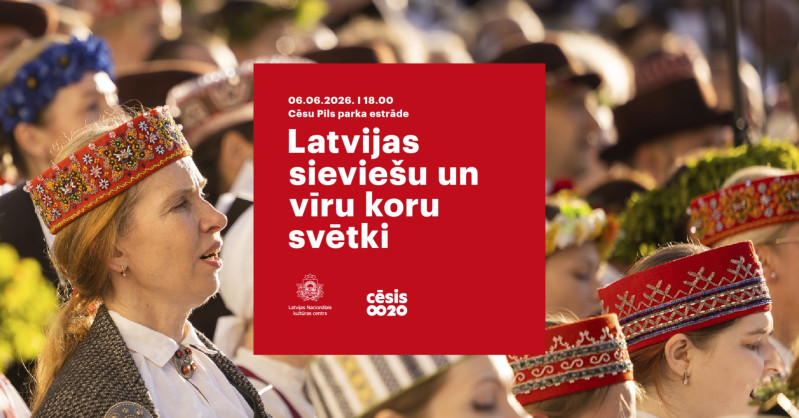
The Cēsis Castle Park open-air stage, nestled within the lush greenery of one of Latvia’s most historic towns, is preparing to host a resonance that has been a decade in the making. This June, the Latvian Women’s and Men’s Choir Festival returns to this medieval setting, inviting thousands of participants and spectators to witness a performance built around the theme of “The Meeting.”
In the Baltic states, choral music is far more than a hobby; it is a fundamental pillar of national identity and a UNESCO-recognised cultural treasure. The upcoming festival in Cēsis serves as a vital milestone in the country’s cultural calendar, marking the first time in ten years that this specific gathering of gender-segregated choirs has returned to the town’s iconic park. For the local community and international visitors alike, the event represents a rare opportunity to hear the distinct acoustic power of all-male and all-female ensembles performing both separately and in massive unison.
A Symphony of Voices and Nature
The artistic vision for the festival, as described by director Anna Klišāne, focuses on the intersection of human artistry and the natural environment. “In the Cēsis Castle Park stage, surrounded by summer’s splendour, we will celebrate the meeting of contemporaries—a rarity in today’s frantic pace,” Klišāne explains. “Alongside the joy of meeting one another, we will enjoy the encounter of the human voice with nature’s own score.”
This philosophy is reflected in a programme that balances the heavyweights of Latvian choral history with cutting-edge contemporary works. The repertoire includes established classics alongside recent compositions by Laura Jēkabsone, Jēkabs Jančevskis, Valts Pūce, and Juris Vaivods. A significant highlight for musicologists and enthusiasts will be the world premiere of a new cycle composed specifically for this event by Jēkabs Jančevskis, featuring lyrics drawn from traditional Latvian folk songs.
Adding to the prestige of the evening is the involvement of Maestro Raimonds Pauls. As Latvia’s most celebrated living composer, Pauls’ presence and work provide a bridge between the nation’s popular music history and its formal choral traditions. The performance will be supported by the Vidzeme Chamber Orchestra and a rhythmic group under the direction of Jančevskis, with soloists Ieva Sutugova, Jolanta Strikaite, and Atis Zviedris providing additional vocal depth.
The Long Road to 2028
While the Cēsis festival is a major event in its own right, it also serves a strategic purpose within the broader Latvian cultural ecosystem. It is a critical preparatory step toward the XXVIII General Latvian Song and XVIII Dance Festival scheduled for 2028. These massive “General” festivals occur only once every five years and involve tens of thousands of performers, making smaller regional gatherings like the one in Cēsis essential for maintaining the technical proficiency and morale of the nation’s choirs.
The tradition of holding dedicated gatherings for women’s and men’s choirs dates back to the mid-20th century. These events were originally established to strengthen and develop the specific vocal techniques required for gender-specific ensembles. Over the decades, these meetings have rotated through various Latvian cities, including Dobele, Liepāja, and Jelgava, but Cēsis—with its medieval ruins and natural acoustics—remains one of the most sought-after venues for both performers and audiences.

Practical Information for Visitors
The main concert is scheduled for the evening, but the cultural experience extends well beyond the final note of the formal programme. At 21:00, the festivities move to Rose Square (Rožu laukums) for a “zaļumballe”—a traditional Latvian open-air ball. This social gathering, featuring the Cēsis Brass Band, allows the choir members and the public to mingle and dance, embodying the “meeting” theme that defines the festival.
Tickets for the event are available through the “Biļešu paradīze” network. For those travelling from the UK or elsewhere in Europe, Cēsis is easily accessible by train or bus from the capital, Riga, offering a perfect blend of high-culture performance and the serene beauty of the Gauja National Park. The festival is organised by the Latvian National Centre for Culture in cooperation with the Cēsis Municipality, ensuring a high standard of production for what is expected to be one of the highlights of the Baltic summer season.
Source: Cēsu novada pašvaldība


Comments