Bank of England June Rate Decision: Will the Base Rate Fall to 3.75%?
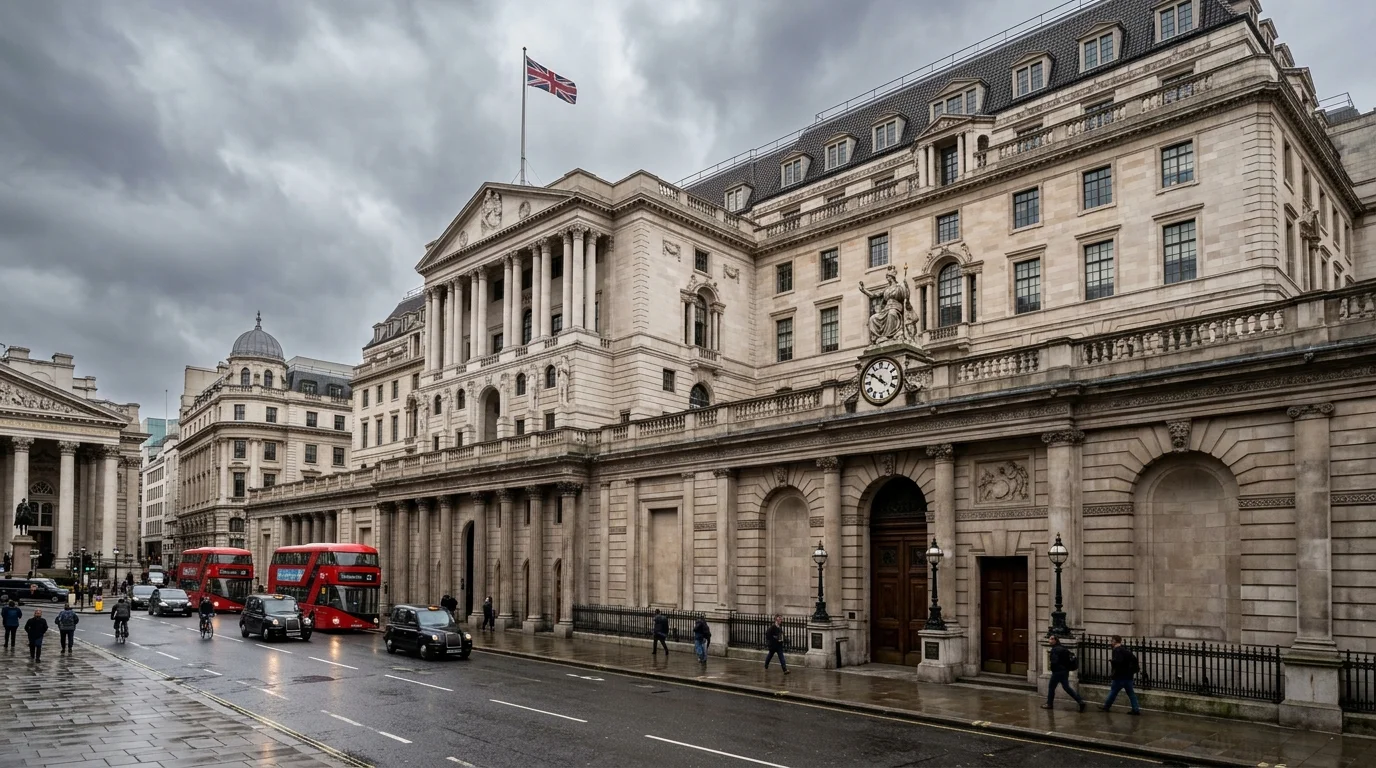
On May 20, 2026, the release of flash Purchasing Managers’ Index (PMI) data and the latest wage growth figures from the Office for National Statistics (ONS) have placed the Bank of England’s Monetary Policy Committee (MPC) under intense scrutiny. With the current base rate sitting at 4.0%, and inflation hovering near the elusive 2.0% target, the upcoming June rate decision represents a critical juncture for the UK economy. For households managing mortgage renewals and savers seeking yield, the decision will dictate financial strategy for the second half of the year.
Forecast: Bank of England June 2026 Interest Rate
| Feature | Details |
|---|---|
| Forecast Question | Will the Bank of England lower the base rate to 3.75% or less in June 2026? |
| Decision Date | Scheduled MPC Announcement, June 2026 |
| Current Rate | 4.0% |
| Target Resolution | YES if the official Bank of England base rate is announced at 3.75% or lower. NO if it remains at 4.0% or higher. |
| Primary Source | Bank of England Monetary Policy Committee Official Decisions |
The 2.0% Inflation Milestone and Wage Growth Friction
The case for a 25-basis-point cut to 3.75% is primarily built on the Consumer Prices Index (CPI) performance. Data as of May 2026 suggests that headline inflation has stabilized at or near the Bank’s 2% target. However, the MPC, led by Governor Andrew Bailey, has historically emphasized that headline figures do not tell the whole story.
Wage growth remains the primary “sticky” indicator. While inflation has cooled, annual wage increases are still tracking above 4%, a level that some committee members argue could reignite domestic price pressures if interest rates are lowered too prematurely. The split within the MPC typically centers on whether services inflation—driven largely by labor costs—is on a sustainable downward path. If the June data shows a cooling in private sector pay, the barrier to a rate cut significantly lowers.
Flash PMI Data and the Economic Growth Dilemma
Today’s flash PMI data provides a real-time snapshot of economic activity that the MPC will weigh heavily. A reading significantly above 50.0 indicates expansion, which can sometimes give the Bank pause; if the economy is growing robustly, there is less immediate pressure to stimulate it via lower rates.
Conversely, if the PMI data suggests that the manufacturing or services sectors are beginning to stall under the weight of the current 4.0% rate, the argument for a “maintenance cut” becomes more persuasive. Economists are currently divided: approximately 55% of market participants are pricing in a June cut, while 45% believe the Bank will wait until August to ensure that the 2% inflation target is truly bedded in. This narrow margin reflects the uncertainty surrounding the MPC’s appetite for risk in a volatile global environment.
Mortgage and Savings Outlook: The Cost of Waiting
The stakes for the June decision are highest for the approximately 1.5 million UK homeowners whose fixed-rate deals are set to expire in 2026. Lenders have already begun pricing in a potential cut, with some five-year fixed products dipping below 4%. However, a “No” vote in June—keeping the rate at 4.0%—could cause a temporary rebound in swap rates, leading banks to withdraw their most competitive offers.
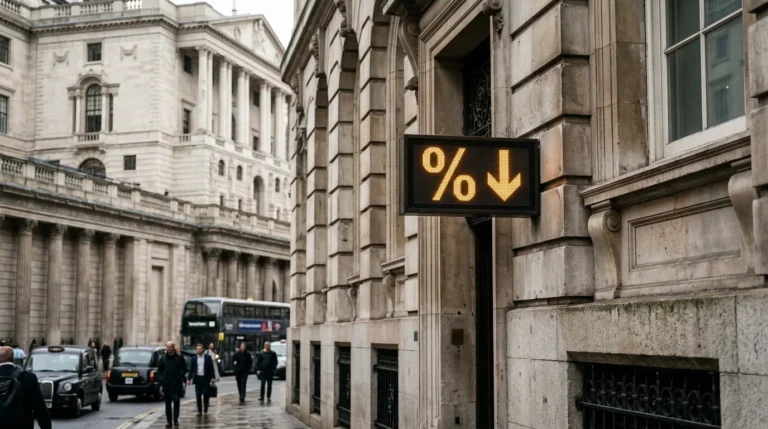
For savers, the window for locking in high-yield fixed-term bonds may be closing. If the base rate falls to 3.75%, easy-access accounts currently offering near 4.5% are expected to see rapid downward adjustments. Financial advisors suggest that while a 0.25% change may seem marginal, it signals the start of a loosening cycle that could see the base rate reach 3.25% by the end of 2026, making current savings rates look highly attractive in hindsight.
Resolution Rules and Evidence
This forecast will resolve based on the official announcement following the June 2026 MPC meeting. The outcome is binary: either the rate is reduced from its current 4.0% level to 3.75% (or lower), or it is maintained/raised.
Evidence will be drawn exclusively from the Bank of England’s official communications. The MPC meets roughly every six weeks to evaluate these economic indicators, and the June meeting is viewed as the first realistic window for a policy shift following the stabilization of inflation in the second quarter of 2026. Until the official statement is released, the market remains in a state of high-sensitivity to any ONS data revisions regarding employment and service-sector pricing.
Source: Bank of England
Source check Economic Data Verification
This forecast is based on official MPC meeting schedules and ONS inflation reporting standards.
- Confirmed Bank of England MPC meeting schedule for 2026
- Verified current 2026 base rate levels from official BoE archives
- Cross-referenced ONS inflation target protocols
- Source
- Bank of England Monetary Policy
- Scope
- United Kingdom
- Updated
- 2026-05-20 15:17
Source check
Report a trust issue
Send a clear signal to community moderation if the source, facts or context need review.



Comments