Airspace Threat Lifted in Krāslava: Latvian Border Town Resumes Operations

The National Armed Forces of Latvia (NBS) have officially declared an end to the airspace threat that disrupted the Krāslava municipality early on May 15, 2026. As of 06:43 local time, military officials confirmed that the immediate danger to the region’s gasses has passed, allowing a cautious return to daily routines for a community situated on the sensitive eastern edge of the European Union and NATO. While the specific nature of the threat was not immediately detailed in the primary alert, the regional response highlights the high state of readiness maintained by Baltic authorities in the current geopolitical climate.
Strategic Security on the NATO Frontier
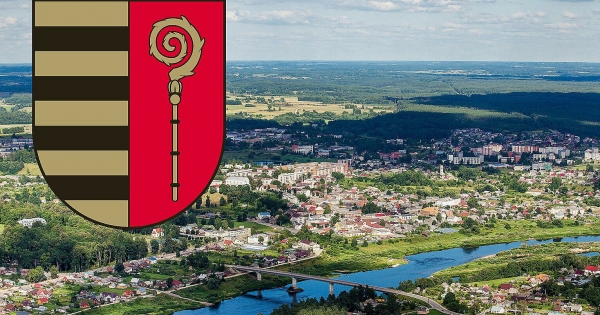
Krāslava occupies a geographically significant position, bordering Belarus and lying in close proximity to the Russian frontier. For residents of the United Kingdom, where airspace incursions are often handled with distant maritime interceptions, the reality in eastern Latvia is far more intimate. When an airspace threat is detected here, it triggers an immediate and comprehensive civil protection protocol that affects every level of society. The decision to move schools and municipal offices to a remote-only status is a standard precautionary measure designed to clear the streets and ensure that emergency services have unhindered access to the region’s infrastructure.
The National Armed Forces have indicated that further details regarding the incident will be disseminated through their official social media channels, specifically under the “Latvijas armija” accounts. This reliance on digital communication reflects a modern approach to hybrid threats, where keeping the public informed in real-time is considered as vital as the physical defense of the border itself. The swift cancellation of the alert suggests that the unidentified objects or aerial anomalies were either neutralized, identified as non-hostile, or exited the sovereign airspace of the Republic of Latvia.
Restoring Public Services and Local Impact
Despite the lifting of the alert, the transition back to normalcy is not instantaneous. During the period of active threat, the Krāslava Municipality Civil Protection Commission mandated that all educational processes be conducted remotely. Following the 06:43 update, kindergartens have been cleared to resume their operations, though parents are advised that start times may be staggered as staff return to their posts. Municipal institutions, which had been operating in a “duty mode” via remote connection, are now beginning the process of reopening physical offices.
Crucially, the local hospital remained operational throughout the alert, maintaining a “work mode” status to handle any potential emergencies. This underscores the resilience of the Latvian healthcare system in the face of security disruptions. For the general populace, the instructions remain clear: employees are urged to contact their employers directly to coordinate the return to the workplace, and patients with scheduled appointments are advised to check in with their family doctors (GPs) to confirm that clinics are operating as scheduled.

Monitoring and Future Readiness
As the immediate tension subsides, the focus shifts to the verification of the event. The Civil Protection Commission and the NBS will likely conduct a debriefing to analyze the speed of the communication chain and the effectiveness of the remote-work transition. For the international community, particularly within the UK and other NATO allies, the incident serves as a reminder of the constant pressure faced by frontline states. The ability of a local municipality like Krāslava to pivot to emergency protocols and back again within a single morning demonstrates a level of civil preparedness that has become a necessity in Eastern Europe.
Residents are encouraged to remain vigilant and continue following official updates. The next milestone for the community will be the full resumption of physical schooling, expected by the following morning, provided no further airspace anomalies are detected. The situation remains under the close observation of the National Armed Forces, who maintain a 24-hour surveillance of the region’s skies.
Source: Krāslavas novada pašvaldība



Comments